The Corner Pizza Bar (https://thecornerpizzabar.com/) is a super-casual pizzeria and bar in downtown Orlando, located at 150 S Magnolia Ave, Orlando, FL 32801. It is one of the closest restaurants within walking distance to the Dr. Phillips Center for the Performing Arts, and I was on my way to a show when I met a friend, his girlfriend, and another friend of his there for dinner. They were kind enough to invite me to join them, or otherwise, I would have gone straight from work to the concert, skipping dinner and some really pleasant human contact with really pleasant humans. I wasn’t expecting the pizza would be so good, either!
First of all, I liked that The Corner Pizza Bar was kind of dark and somewhat cavernous inside. I love restaurants like this, where you aren’t being blinded by bright light and don’t feel like other diners are right on top of you. This was late June, when the World Cup was happening, so most people in there were watching socc… um, footba… nah, whatever, soccer on the large-screen TVs. We were just there to eat and chat before seeing the brilliant British singer-songwriter-piano player Joe Jackson, an underrated musical legend who has been reinventing himself since the late ’70s. Yes, he’s still around, and he’s still got it.
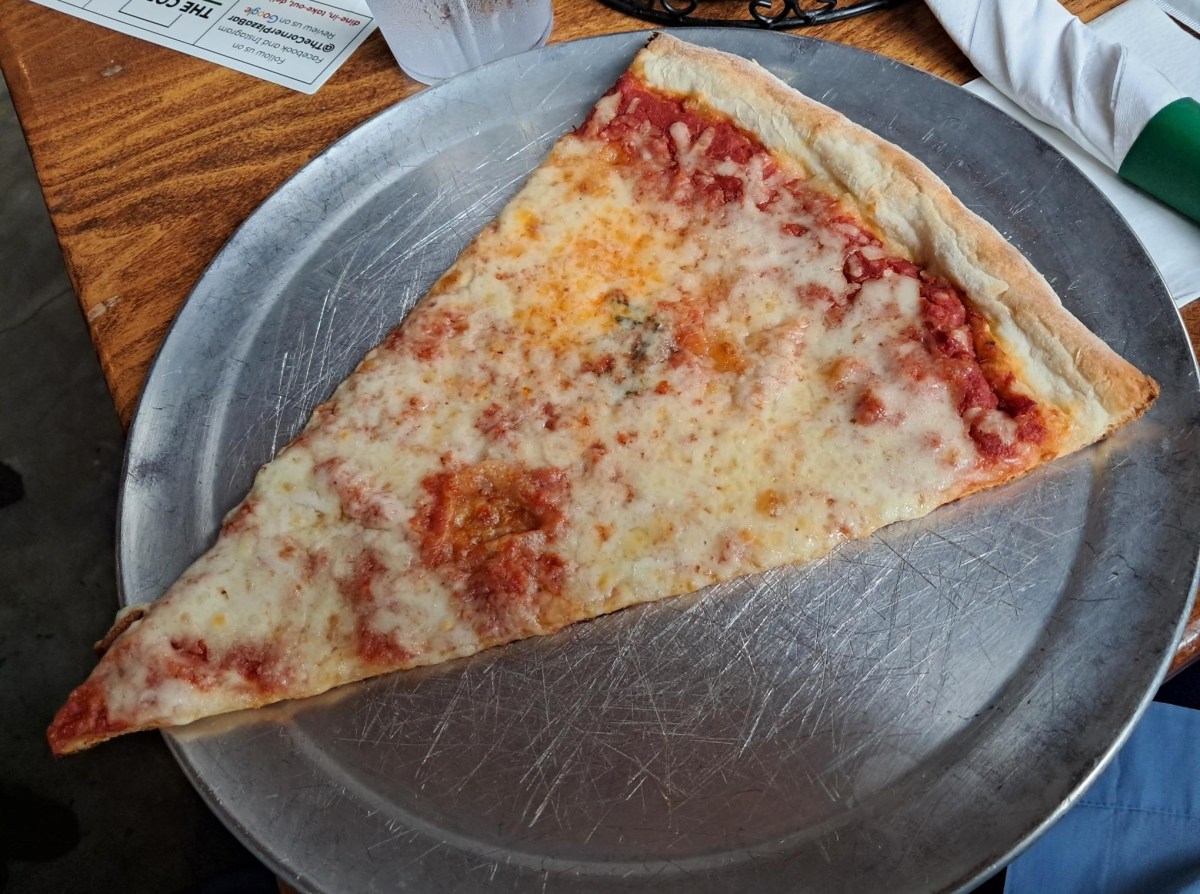
Since this has been my year of cutting carbs and losing weight, I figured I was at a new pizzeria, so I might as well treat myself and try their pizza. I appreciate any pizzeria that sells slices, so I went with a plain cheese slice. Toppings are fine, but you can really size up a pizzeria and evaluate their strengths and weaknesses by ordering a plain slice and enjoying it on the premises. Well, for one thing, this slice was HUGE. At a glance, it reminded me of Lazy Moon Pizza, that Orlando institution with three locations that I have a lot of nostalgic love for. But I thought The Corner’s slice was much better than Lazy Moon — more like a traditional thin and crispy New York slice. 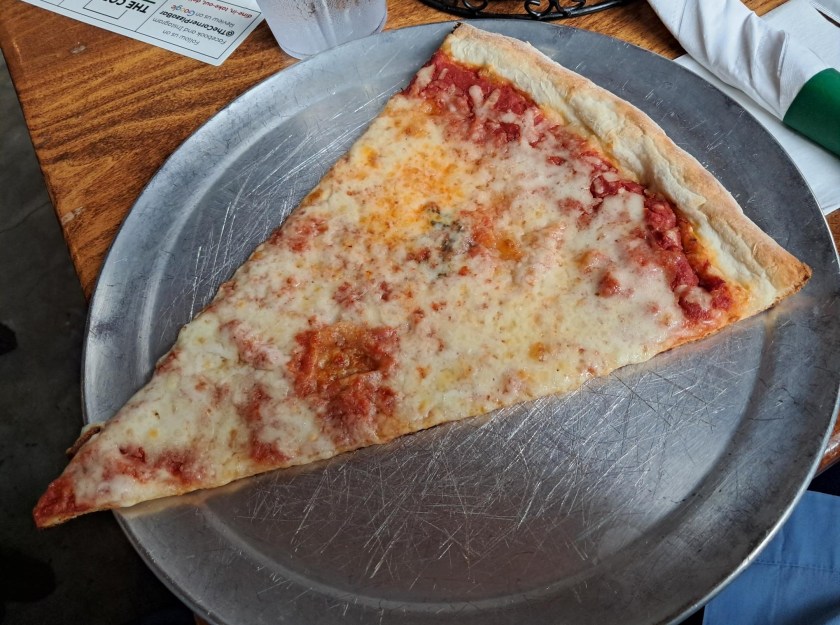
I appreciated that the crust wasn’t burnt to a crisp, the cheese was melty, and the robust sauce didn’t feel like an afterthought. Of course I fold my slices, and this one flopped a little due to sheer size, but it did not affect my enjoyment at all. It was a lot better than some of the better-known and highly vaunted local pizzerias, I can tell you that.
The other thing I ordered was my other go-to at any pizzeria: a Sicilian slice. I love Sicilian pizza more than anyone else I know, again due to nostalgia. I would always get one of these thick, rectangular slices at Cozzoli’s Pizza at the Dadeland Mall food court as a kid in the ’80s, and I’ve been chasing that high ever since. It is nothing like Chicago-style deep dish pizza, and it is less greasy than the rectangular slices of a Detroit-style pan pizza with its caramelized cheese “frico” edges. I love that the Sicilian crust is crispy on the bottom, but underneath the mozzarella cheese and thick tomato sauce, it is pillowy soft. This was a fantastic Sicilian slice, especially in a city where not enough pizzerias offer this option. I have no complaints, no nitpicks. 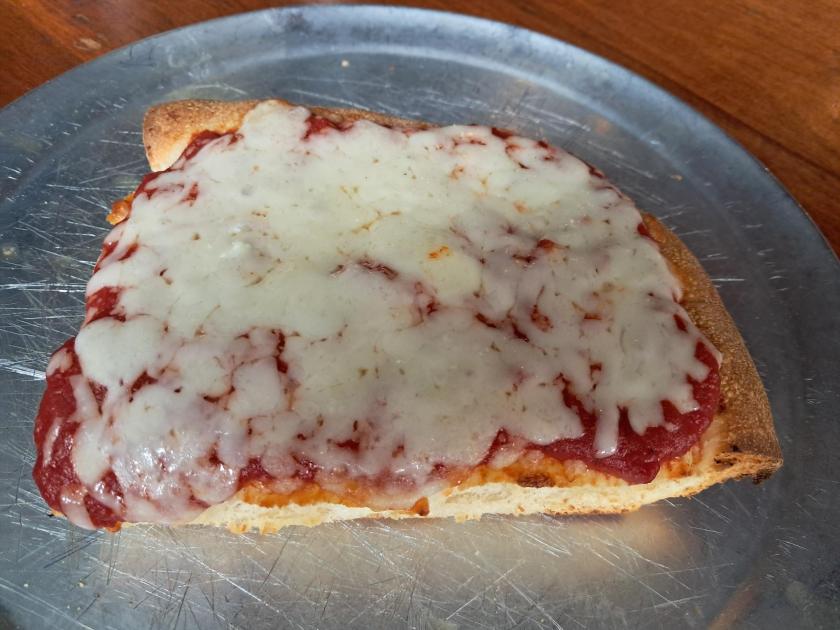
My friend and his girlfriend ordered this calzone to share with each other, but when they started getting full, they asked if I wanted any. Since we were all heading to the concert, I took it upon myself to finish it, and I have no regrets for stepping up. I don’t always go crazy for calzones, but this one had a nice, light crust brushed with garlic butter. Some places overbake them so the crust becomes a bland, dry impediment, rather than an enjoyable component of the finished product. They chose meatballs to go inside, along with the mozzarella and ricotta cheeses, and I forget what else, but you can’t ever go wrong with meatballs at an Italian restaurant. I honestly prefer them to pepperoni or sausage as a pizza topping — either sliced or crumbled. And if you don’t know, now you know! 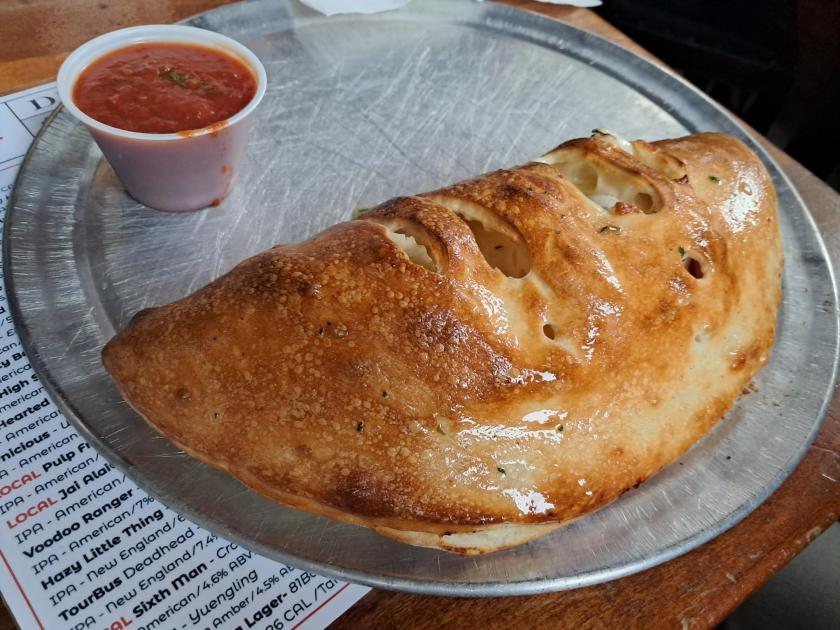
I have to admit, I avoid going to downtown Orlando whenever possible, after two hectic years of working down there, twenty years ago. The parking can be a nightmare, although I paid extra for guaranteed parking in a garage for the Joe Jackson concert, and that put me mere steps away from The Corner Pizza Bar. The nighttime crowds can be intense and intimidating, but this was a quiet Monday night. It’s just a schlep in general, or else I would consider returning to The Corner Pizza Bar somewhat regularly. But next time I attend a concert downtown, I will absolutely go back for a pre-show dinner. The pizza and calzone were better than they had any right to be, the good conversation with friends old and new elevated the entire meal even higher, and then I got to see a musical legend perform for the first time. The Corner Pizza Bar helped make that a memorable, magical Monday.
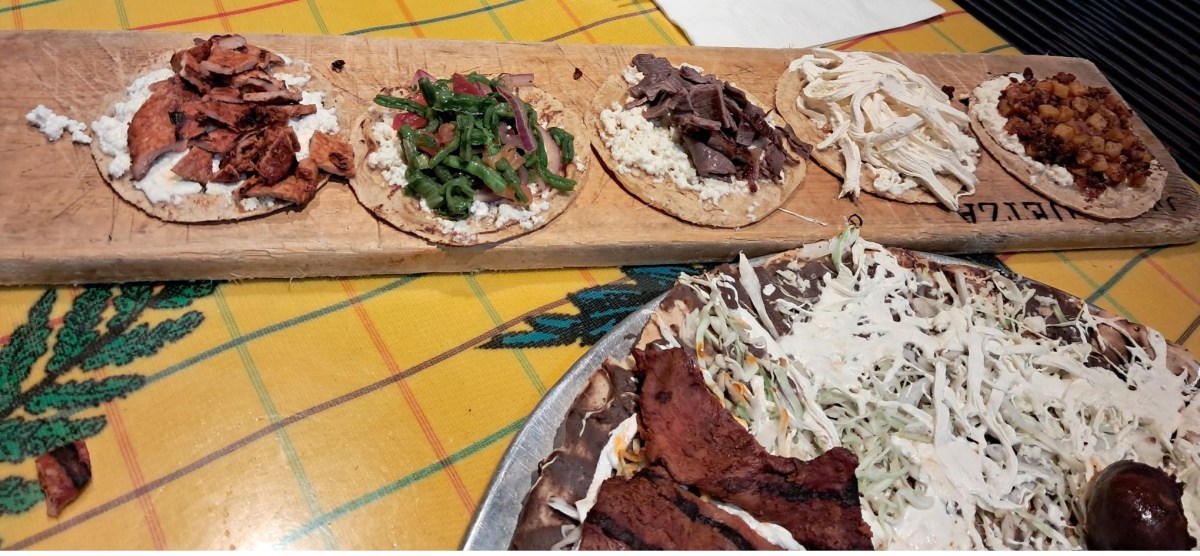
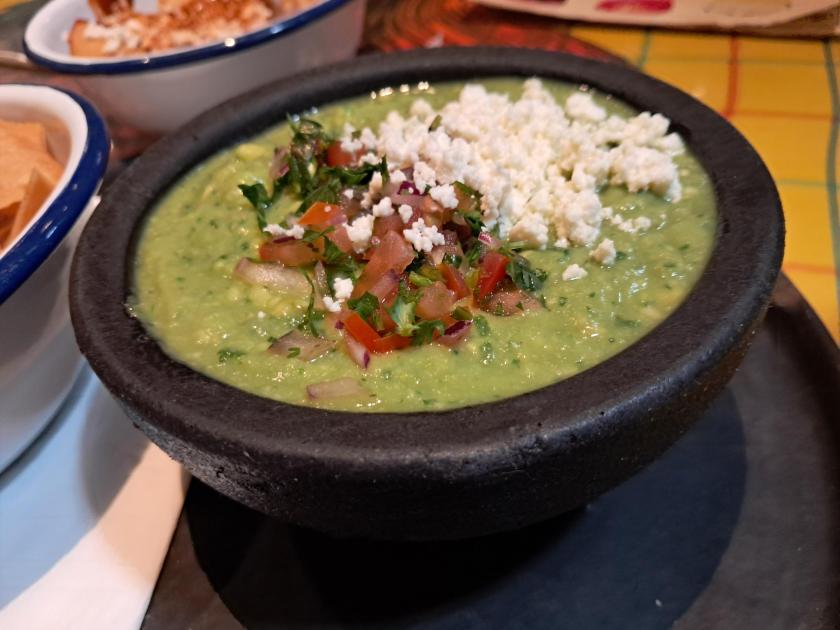 My well-traveled colleague said an authentic molcajete (the mortar bowl that guacamole and salsa are often mixed and served in, usually made of volcanic basalt rock) would have been in the shape of a pig, but that was news to me. As a Florida Man, I’ve eaten plenty of Mexican food, but I’ve never seen a pig-shaped molcajete at any of our Mexican restaurants. Of course, I’ve never found a Oaxacan restaurant anywhere in Florida!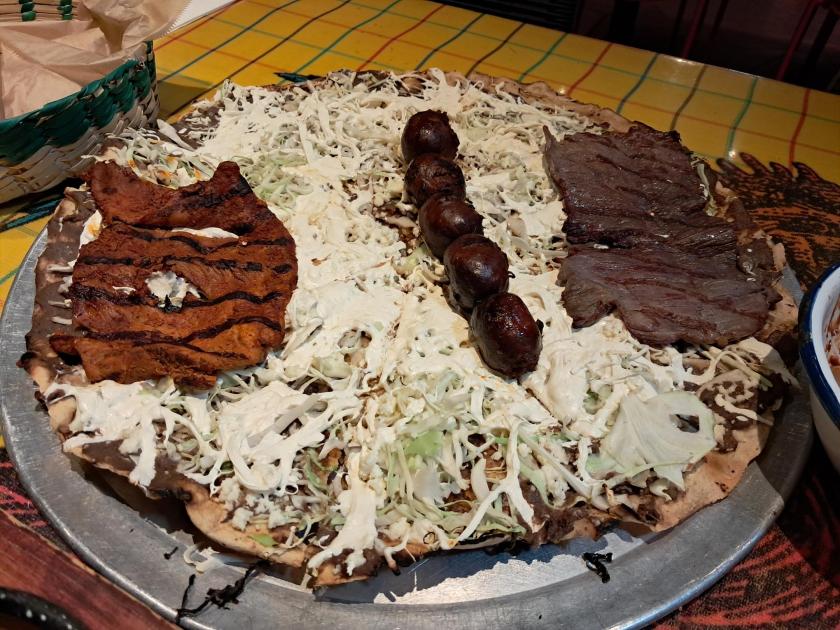
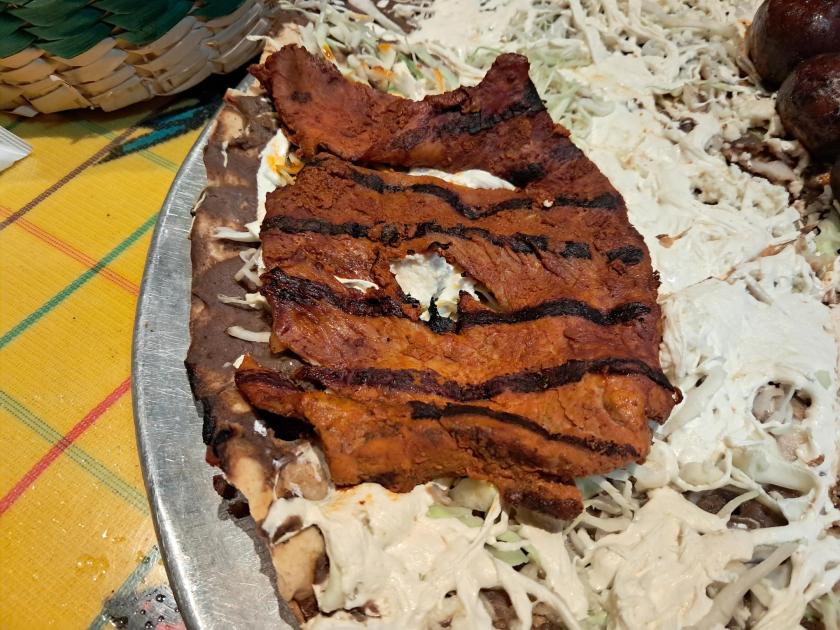
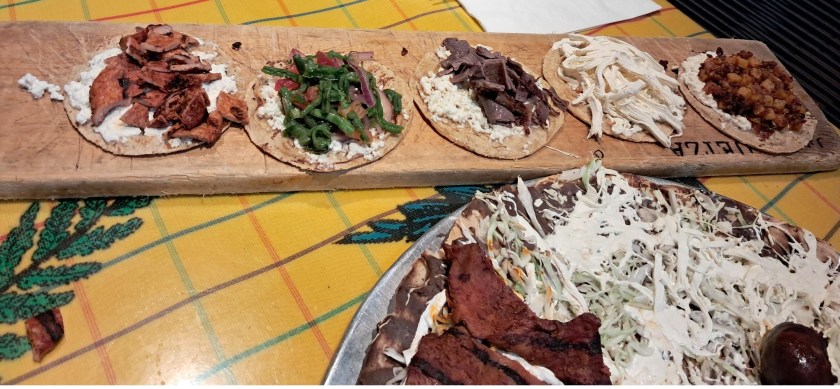
 The beef tasajo on the right was salt-cured, pounded thin, air-dried, and grilled. It tasted like really good carne asada, but was closer in consistency to high-quality beef jerky (just not as dry).
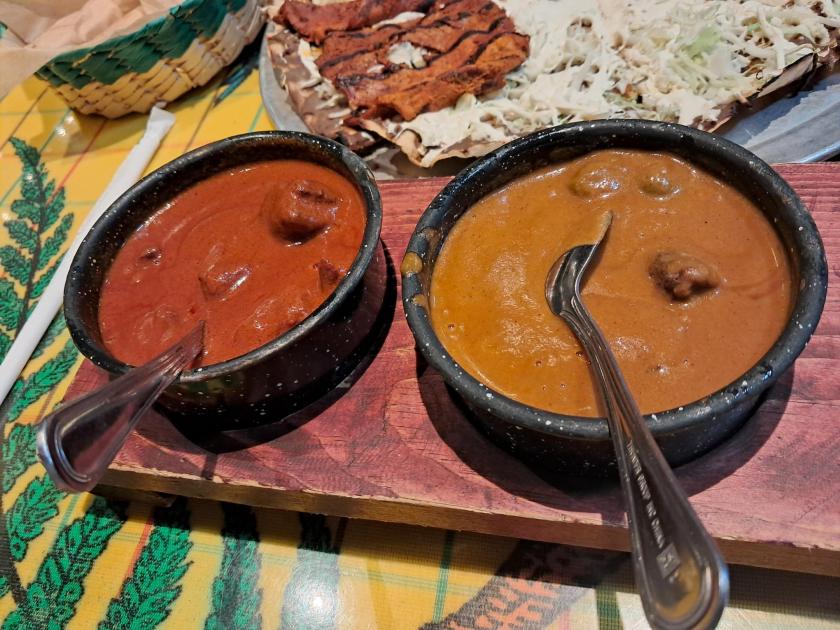 On the right you see mole estofado, a “mild almond-based mole balanced with raisins, olives, and pickled jalapeños, creating a uniquely sweet and savory profile.” I didn’t fully read these descriptions until after we ate, so I never would have guessed it was almond-based, but I can tell you I’ve never had anything quite like it. I thought the raisins and olives were interesting additions, especially because both of them end up in Cuban picadillo, a seasoned ground beef dish that otherwise has nothing in common with mole estofado, or any mole.
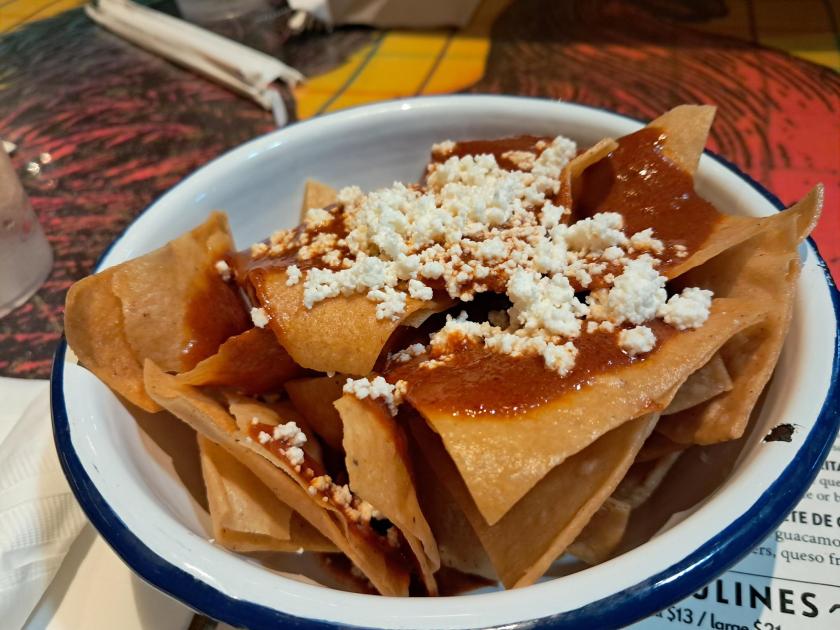
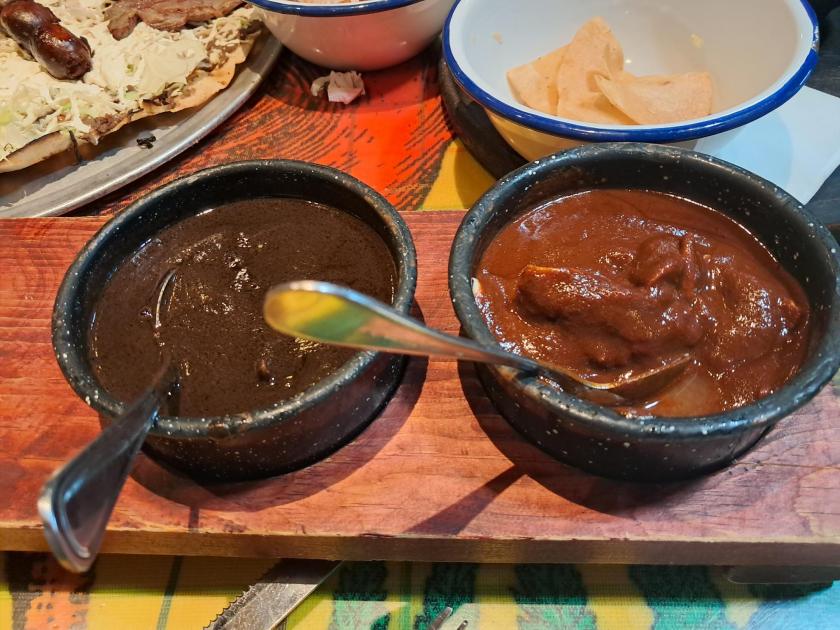 On the right, you see mole coloradito, the same mole served on our complimentary chips at the beginning of the meal. It is a “sweet and mildly spicy mole with guajillo chiles, toasted almonds, peanuts, sesame seeds, spices, and a subtle hint of chocolate.”
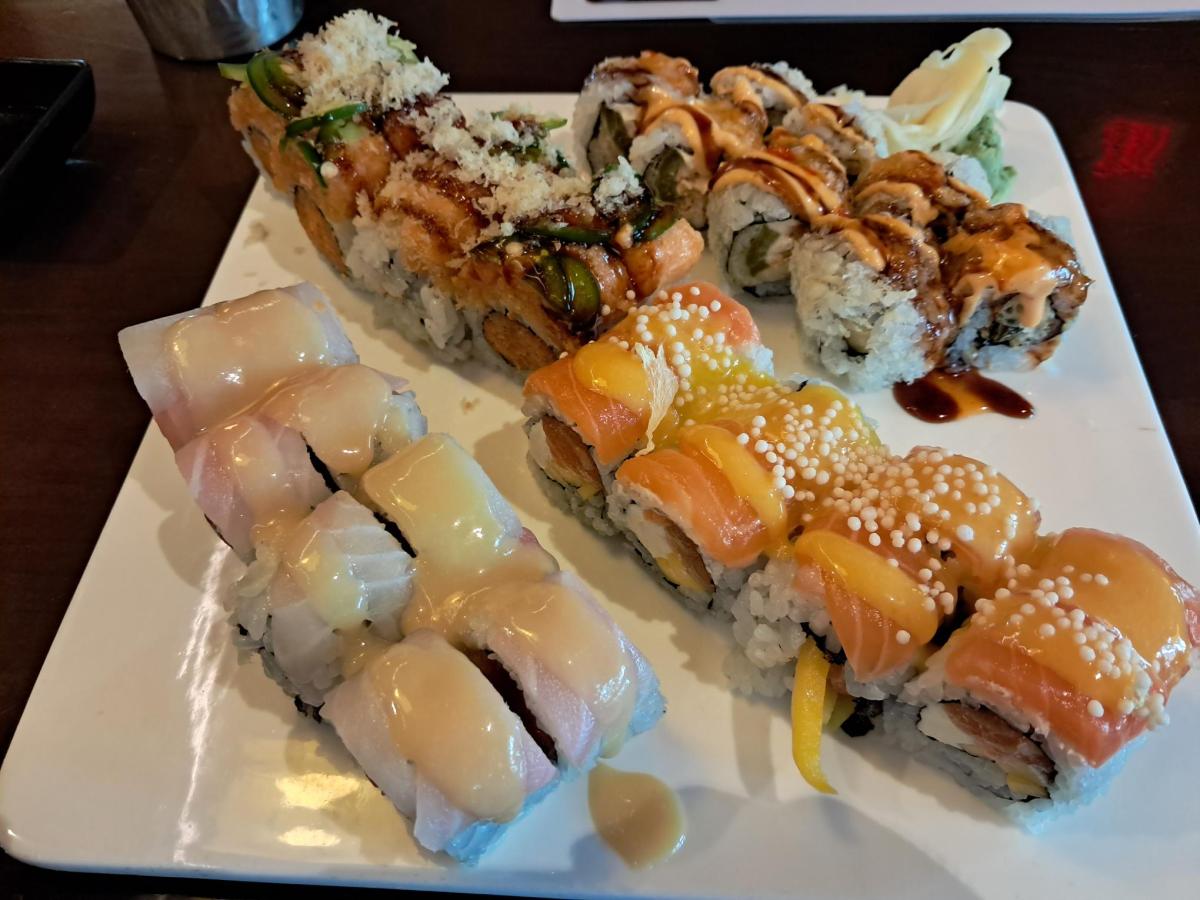
 On the a la carte menu, an order of smoked salmon is $7 and an order of mackerel sashimi is $5, so this along would cost $24 ($7 + $7 + $5 + $5). I’m going to keep a running tally so you can see what a great deal this is.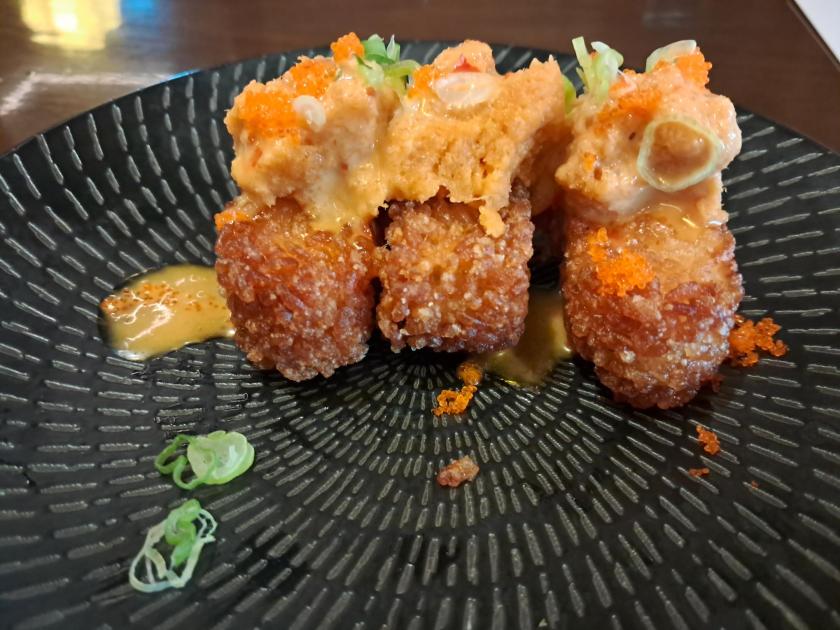


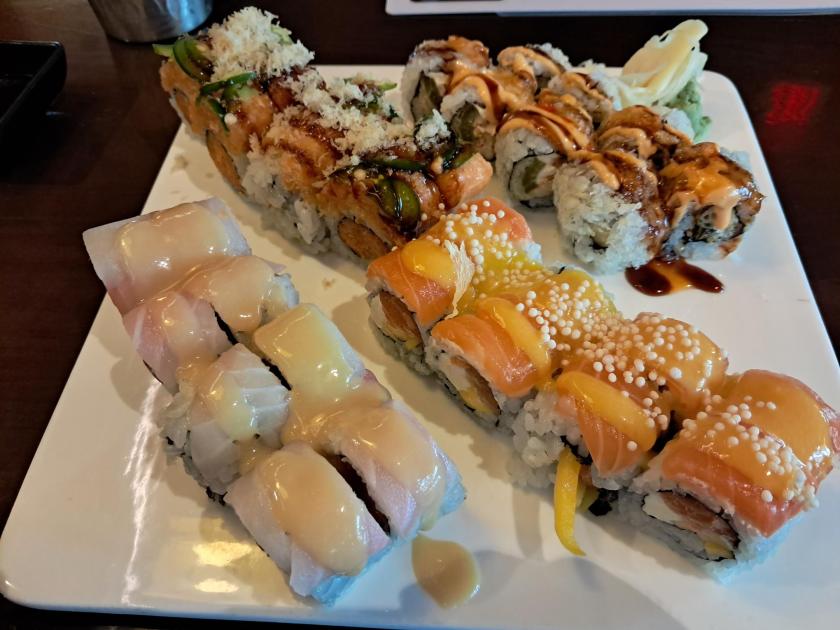
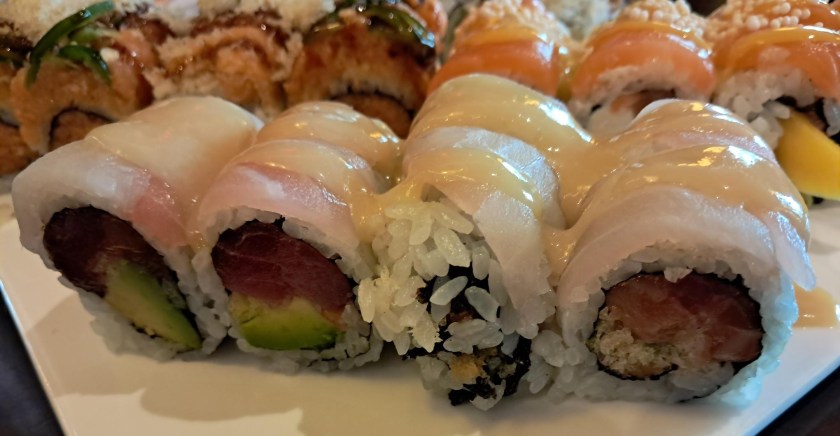
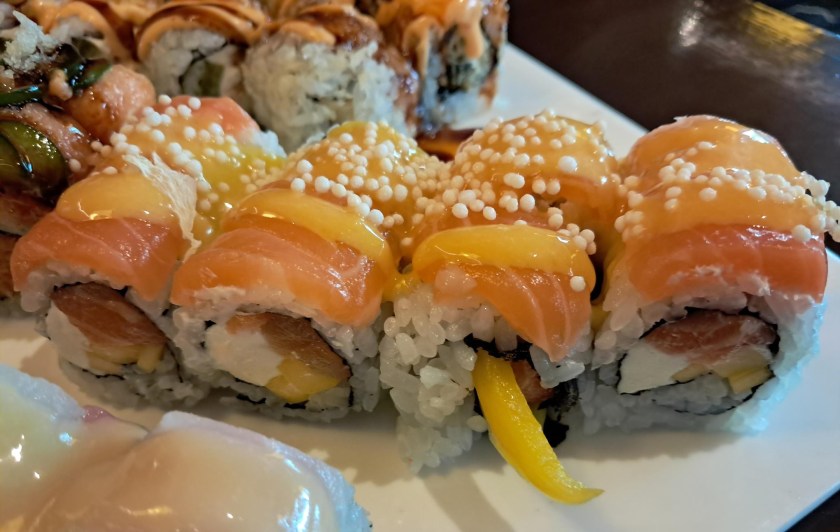 On the a la carte menu, this would be $14, so everything I ordered so far would be a total of $85.

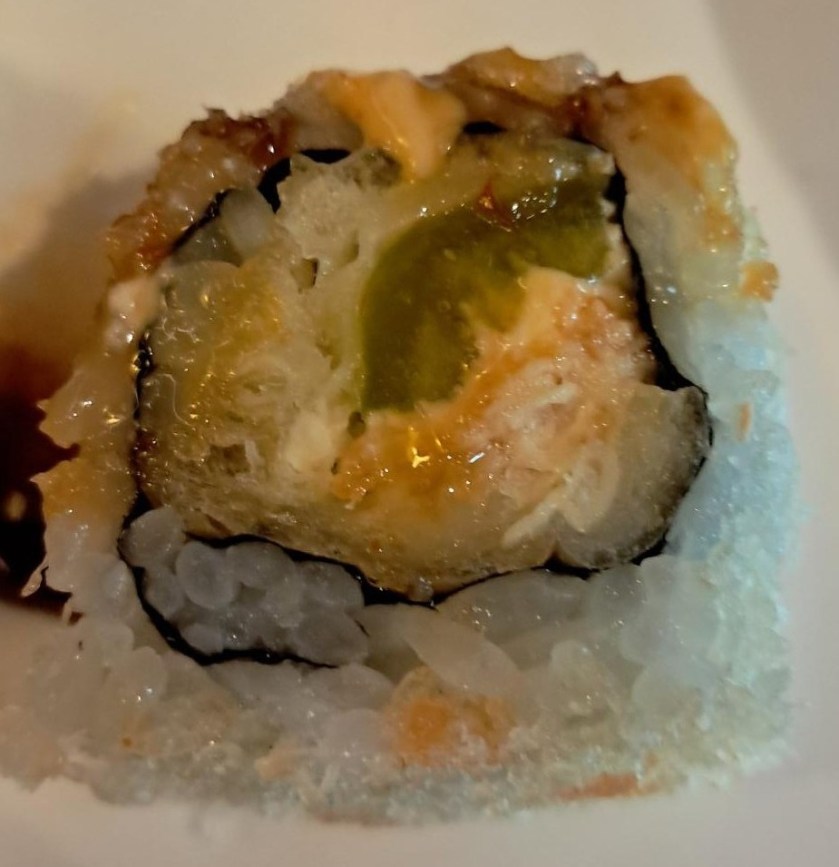
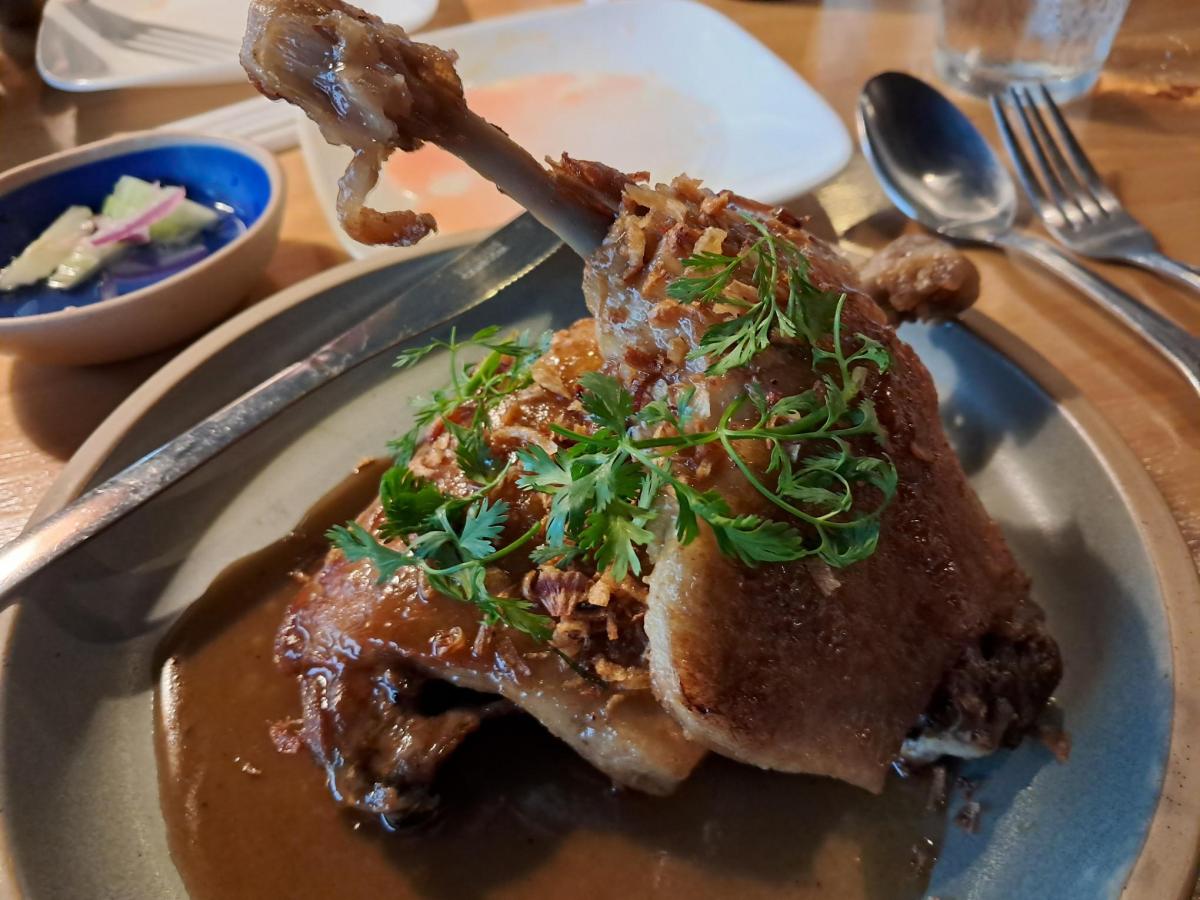
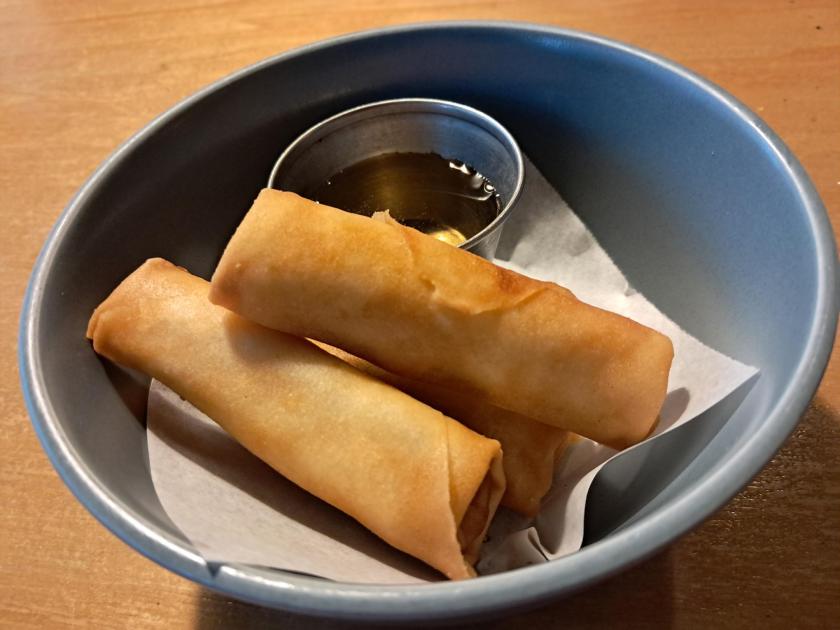

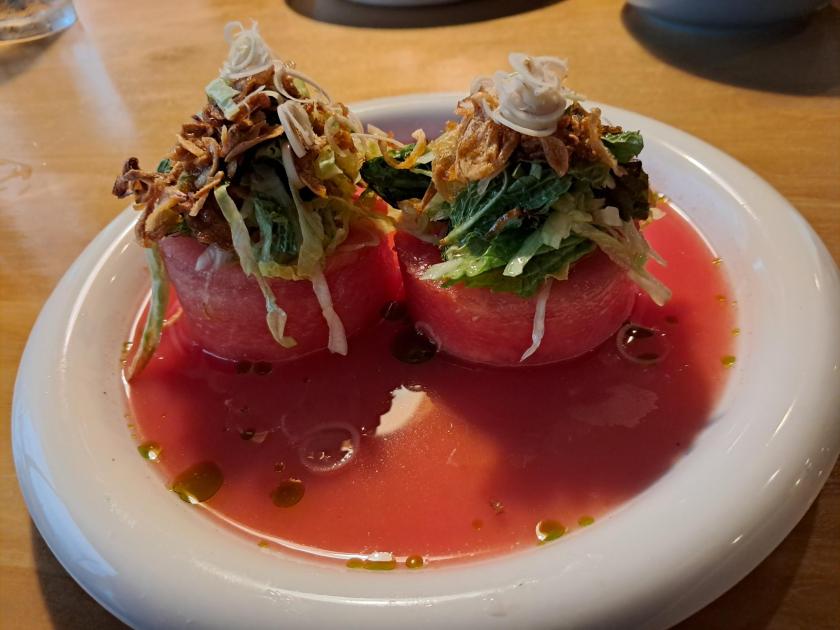
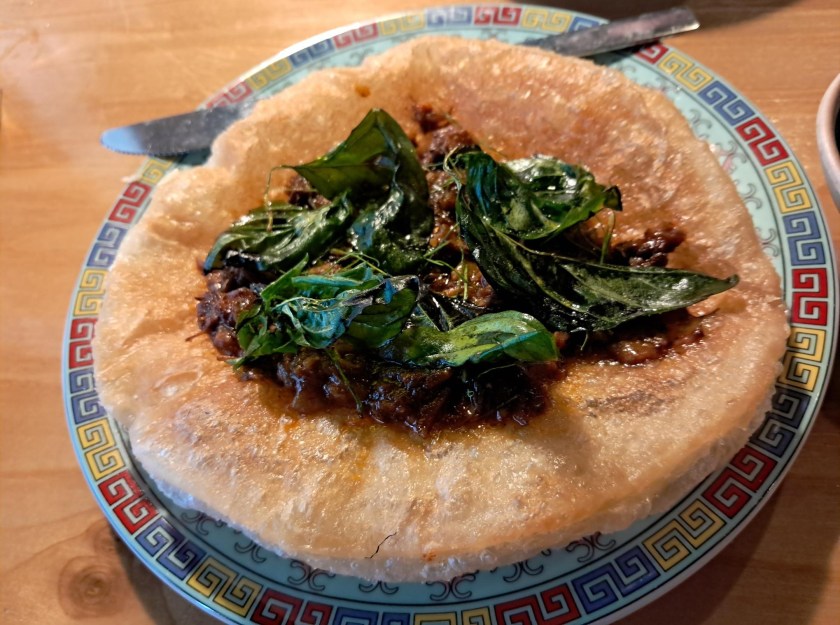 My wife has really been expanding her palate since some surviving some medical issues earlier this summer, and she loves trying new foods more than ever before, which is a joy to watch. She was undaunted by the short rib curry, something she never would have messed with before, but it wasn’t spicy, just flavorful.
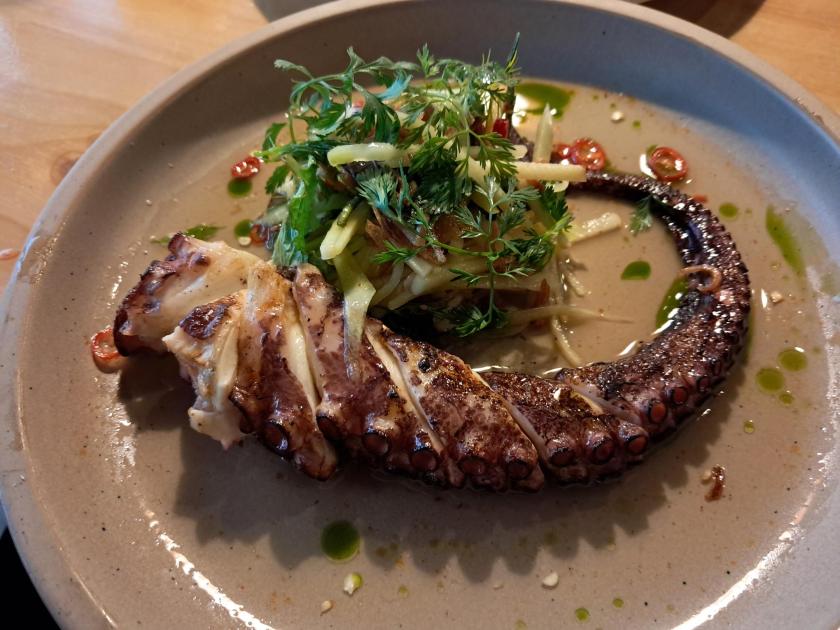
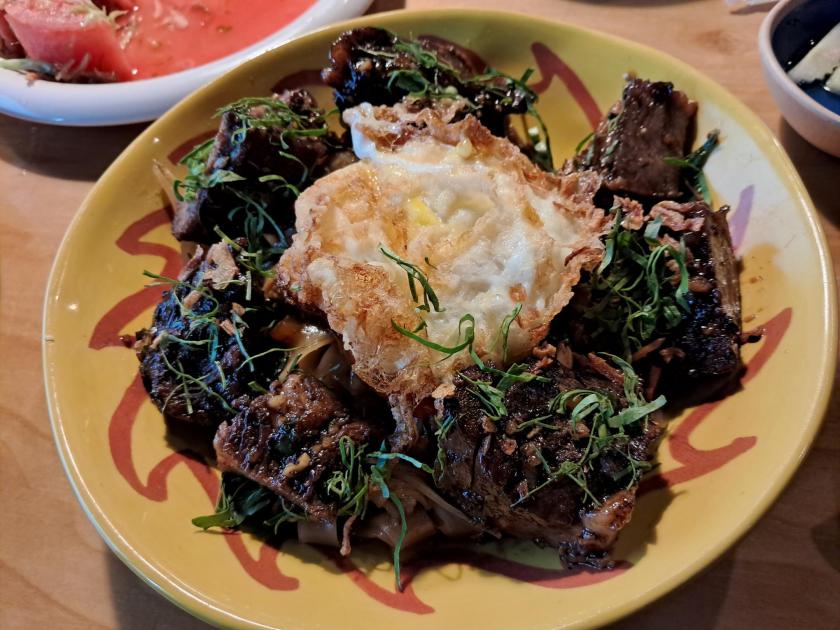 Funny thing, my wife and our friends thought I ordered “tuna noodles” and were surprised when I mentioned beef. I remember eating tuna noodle casserole as a kid, but these Tuun noodles are a world apart from that. Drunken noodle lovers (by which I mean lovers of drunken noodles), don’t sleep on these.