Alma Argentina (https://linktr.ee/AlmaArgentina) opened in late 2021, but my wife and I recently ate there for the first time. It is located at 3607 Aloma Avenue in Oviedo, tucked between Tuskawilla Road and the entrance to State Road 417. There is also a second, much newer location out in Celebration, but this one is close to home for us. We were heading for the 417, not sure what we wanted for an early dinner, and when I pointed out that it was there, she said Argentinian food sounded good, so I made a immediate U-turn. I’m so glad we made a last-minute, game-time decision to try it, because we both loved everything, and I highly recommend it to all.
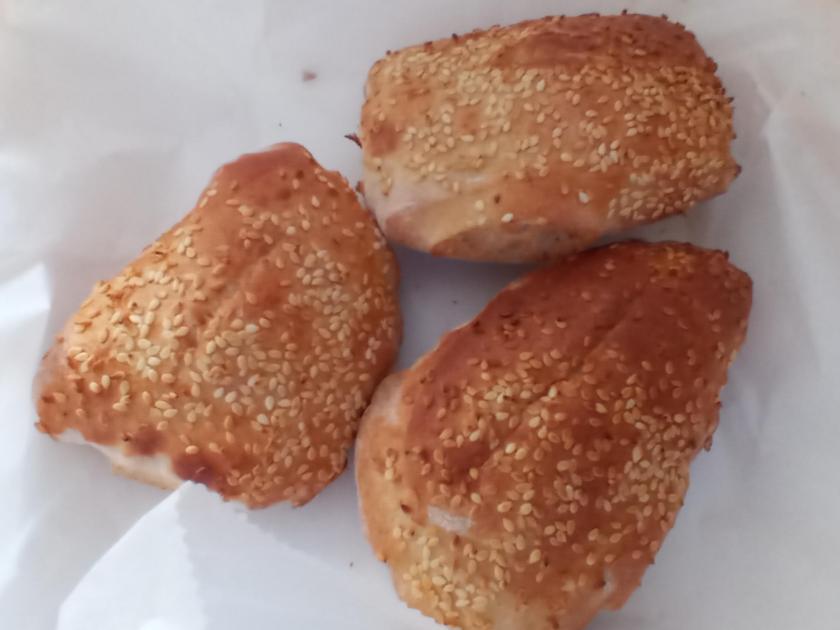
I did not even know what to expect, but Alma Argentina is a small, sit-down restaurant with table service. Our server Julieta was extremely friendly and welcoming, and of course I said it was our first time. She came back quickly with fresh bread for the table, which neither of us expected, but it was a delightful surprise. This was outstanding bread! My photo doesn’t do it justice, but it was so soft, with such a nice, yielding, crackly outer crust, and it was served with a wonderful chimichurri for spreading and/or dipping. Chimichurri is one of the best condiments, especially when it is freshly made, as this almost certainly was. The blend of garlic, parsley, olive oil, and vinegar was so bright-tasting, it was an ideal complement to the bread, and to the festival of meats that followed.
Alma Argentina offers multiple flavors of empanadas, and you can mix and match in orders of three, six, or twelve. My wife was interested in the pork empanada, and I wanted to try pretty much all of them, so we settled for three. Imagine my surprise when Julieta asked if we wanted them baked or fried. I asked her what was better, and she didn’t hesitate to say “Fried.” It wasn’t long before she brought out three gorgeous empanadas, fried to perfection. 
It was my wife’s idea to try the pork empanada, with slow-cooked pork shoulder, but I ended up eating most of it. With no other ingredients, I wondered if it might be a little dry or boring, but it absolutely wasn’t. The pork was so tender and flavorful! 
I figured “When in Argentina, order the Classic Argentinian empanada.” This one came stuffed with seasoned ground beef and chopped onions, peppers, olives, and hard-boiled eggs. Magnificent! It was so juicy, it splattered my favorite guayabera shirt when I took a bite, and I wasn’t even mad. I liked the different textures in this one, but I am generally a fan of adding hard-boiled eggs to things, whether you’re talking about potato salad, chopped liver, or empanadas. 
And this was the osso bucco empanada, with more slow-cooked, tender meat, onions, peppers, and what looked like diced carrots and possibly a pea. It was almost like stew in there, so it got pretty messy, but so delicious.  These are some of the best empanadas in Orlando, without a doubt. Despite the wet ingredients, the fried pastry shells held up extraordinarily well.
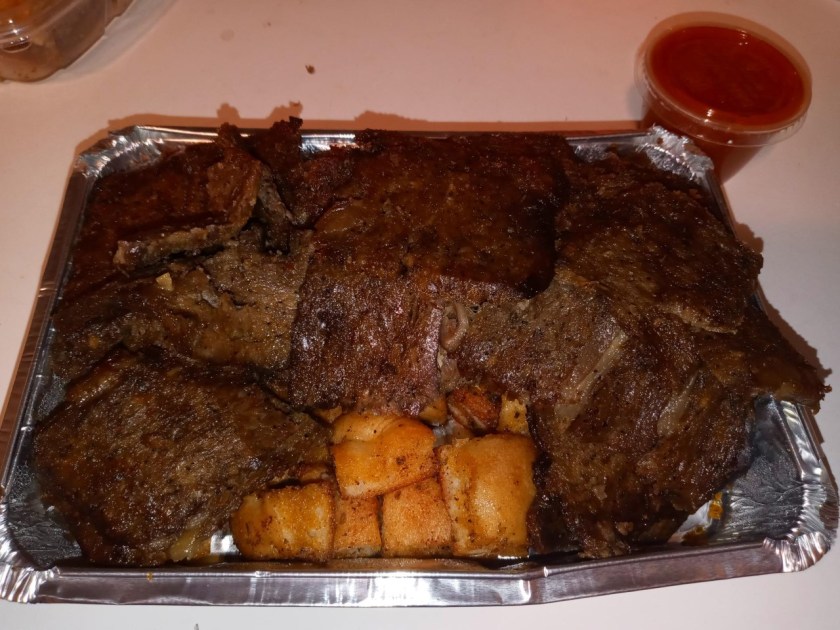
My wife ordered costillas (beef ribs), and she received a large portion with two thick slabs of tender, marbled meat, cross-cut so you got a few short stubs of bone studded in the meat. We were both a little surprised when Julieta asked her how she wanted it cooked, since nobody ever asks how you want ribs cooked. My wife wisely chose medium rare, and it all made sense when they were served in this cross-cut style. It was the perfect temperature. When ribs are sliced this way, the meat easily tears off from around the bone, and it is a very satisfying process to pull the meat off by hand. They reminded me of flanken, an Ashkenazi Jewish dish of braised short ribs cross-cut like this, and you also see them in this style in Korean galbi, just with a sweet marinade.

You can choose a side with the entrees and sandwiches, and she made another wise decision, choosing fries. These are some of my favorite kinds of fries, twice-fried with a crispy, almost batter-like coating. Orlando’s wonderful Brazilian restaurant Mrs. Potato serves very similar fries, and these were on the same level. We shared them, and I was dipping back and forth between ketchup and chimichurri. Even though I can take or leave a lot of fries, these were something special.
Since the bread was so good, and since we were already trying a few different meats between the three empanadas and the beef ribs, I decided to try a choripan sandwich, which came with two different kinds of chorizo sausages. I guess I was hoping for Spanish-style cured chorizo, sliced thin and slightly spicy, similar to salami and pepperoni. Instead, the sandwich on the same delicious fresh bread included two link sausages, both cut the long way. Their shape made it hard to keep them contained in the sandwich, especially with butter lettuce, sliced tomatoes, mayo, and chimichurri adding to things slipping and sliding. This was an extremely messy sandwich to eat, but worth the struggle. 
Here’s a look at the inside. Like I said, both sausages were very savory and kind of greasy, but not spicy, and not cured like Spanish chorizo or your typical Italian salumi. Still good, though!
And for a side, I chose potato salad, since I have been on a kick of trying different versions of potato and macaroni salads whenever I find them on menus. It was good, and better once I mixed in the remaining chimichurri that came with our bread, but the fries definitely took the prize.
I feel like a boob — a real boludo — for not trying Alma Argentina sooner, especially since it is so close to where we live. Everything we tried exceeded our expectations, as did the overall experience of dining in. We will definitely add it to our regular rotating restaurant repertoire, especially for takeout. I look forward to working my way through the *19* savory empanada options, and my wife will want to try the three dessert empanadas at some point. She likes steak even more than I do, so I’m sure she will switch it up and try some of the different Argentinian steaks on future visits. Maybe we’ll share the parrillada, a mixed grill platter that comes with flap meat, beef ribs, chorizo, morcilla (blood sausage, which I love, but she wants nothing to do with), sweetbreads, and chinchulines (grilled beef intestines, which are tastier than you would think).
Regardless, if you like meat, don’t do what I did and sleep on Alma Argentina for over two years. It’s a small, family-owned restaurant that is easy to miss if you’re driving by that little segment of Oviedo. Stop in, and you will be wowed by their hospitality and hearty, flavorful food the way we were. ¡Che, buen provecho!


 Good for Kaley Cuoco for choosing to diversify, selling sardine seasoning while still performing the animated voice of Harley Quinn. Beauty, talent, and business savvy!


 This was such a crowd-pleaser, and it was definitely the highlight of the meal for me. Like I said, whenever I get around to returning, I’m gonna get this just for myself, and then suggest anyone else I am with share one.


 Even though this dish is from Kenya and Tanzania, it made me realize it has been more than a decade since I’ve had Ethiopian food (another cuisine that handles collard greens very well). It is also really damn good, and I need to get some again soon.


 Gumbo is more like a soup or stew than jambalaya, just in case you have confused them in the past. Both have similar ingredients, but gumbo always has more of a broth, with white rice on the bottom of the cup or bowl.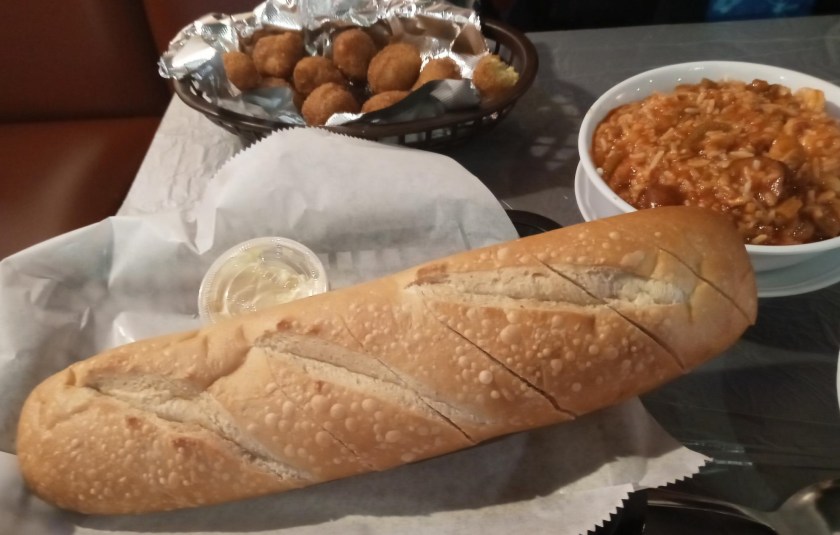
 All the fried platters come with two sides. I chose potato salad and onion rings, so long-time Saboscrivner readers know this is also a RING THE ALARM! feature. The potato salad was cool and refreshing, tangy with a little yellow mustard the way Southern potato salads often are. The onion rings were breaded rather than battered, but they didn’t have those jagged crags that cut up the inside of your mouth, and the onions inside were at a reasonable temperature, not molten and scalding. I dipped the oysters and onion rings in the included cocktail sauce, but the remoulade (not pictured) was the best dipping sauce for both.


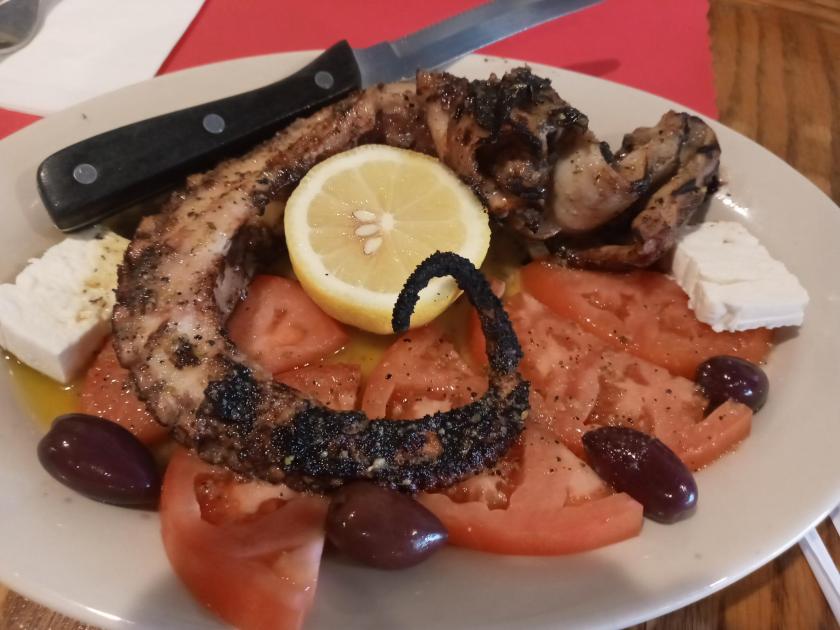
 Needless to say, the papootsakia (hehe) lasted her a few days, and like so many saucy, savory dishes, it kept tasting better and better after every day in the fridge.
 The rice pilaf was already soft and buttery, but I mixed all the tomato sauce I could into it, making it even better.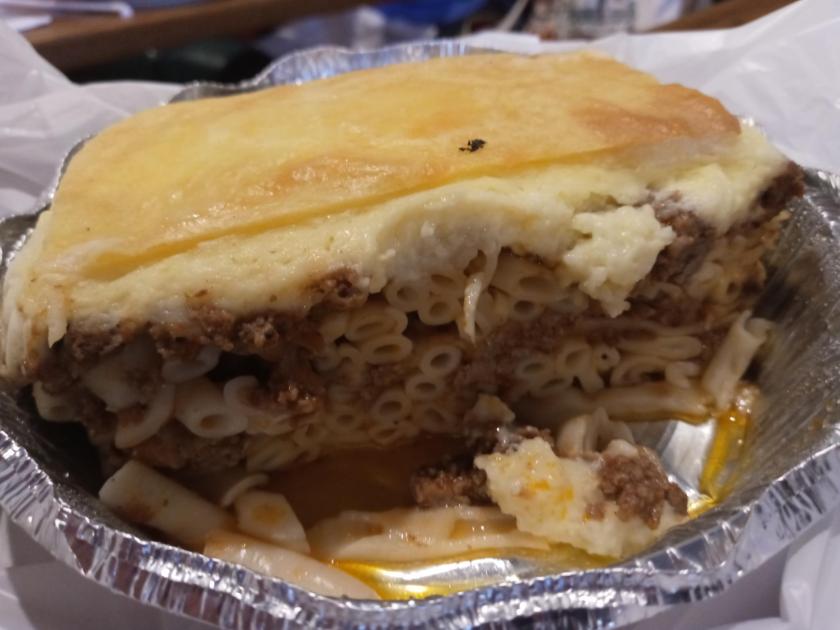



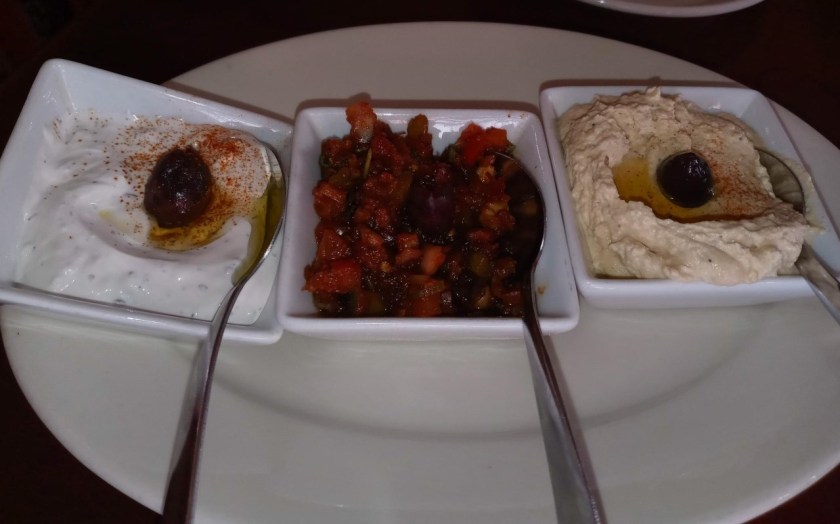
 The word “Zeytin” is Turkish for olive, a favorite delicacy of Chef Z, and we noted that each dip was topped with a kalamata olive. I made sure my wife ended up with all of those.


 The moussaka came with a mountain of that wonderful buttery rice pilaf with orzo, which we both loved.
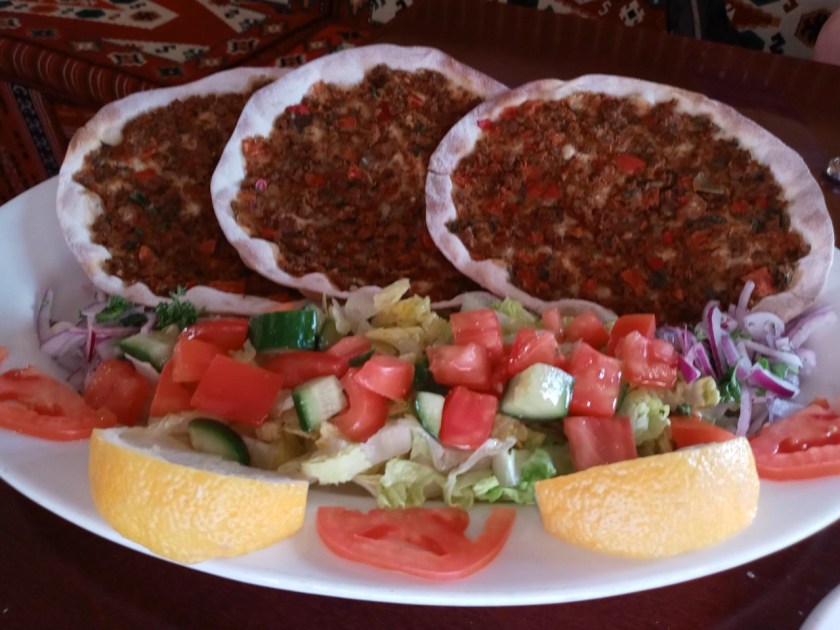 I was impressed that it essentially came with a whole side salad, with chopped romaine lettuce, tomatoes, red onions, cucumbers, and parsley tossed in a very light vinaigrette dressing, which you can roll up inside the lahmacun to eat, like a veggie wrap with meat on the inner wrapping. But there was so much salad, that even after eating all three lahmacun pieces with it, I was able to pack the rest in my work lunch the following Monday. (I also ate the lemon wedges like orange wedges, which is what I usually do with lemon wedges.)





 I do love cooked greens, and the slight sweetness from the fruit made such a difference, especially with the tender crunch of the apples and the chewiness of the raisins (“Nature’s candy,” as my mom would say, trying desperately to convince my brother and I as little kids, and probably herself as well.)
 This is where I admit I’ve had bad experiences with paella elsewhere. Usually you pay a lot and wait a long time, and the rice comes out underdone. Just disheartening experiences overall, which is why I didn’t order a traditional rice-based paella for myself, even in this temple of Spanish cuisine, with a menu created by one of the greatest chefs in the world. Because the rice was tender and everything came together, it was probably the best paella I’ve ever had.
 The pasta was al dente in places, but the edges that touched the pan were crispy like pegao, the crispy rice from the bottom of the rice cooker that some people dismiss but others (like my wife) love. The dollops of creamy, garlicky aioli stood out against the blackness of the pasta and the blackness of the pan, reminding me of a line Alan Moore wrote in the comic book Top Ten #8, later plagiarized by Nic Pizzolatto in the first season finale of True Detective, about seeing stars shining in the night sky, and how there is so much darkness out there, but just to see any light at all means the light is winning. Well, nobody else wanted anything to do with my rossejat negra, which means I was definitely winning!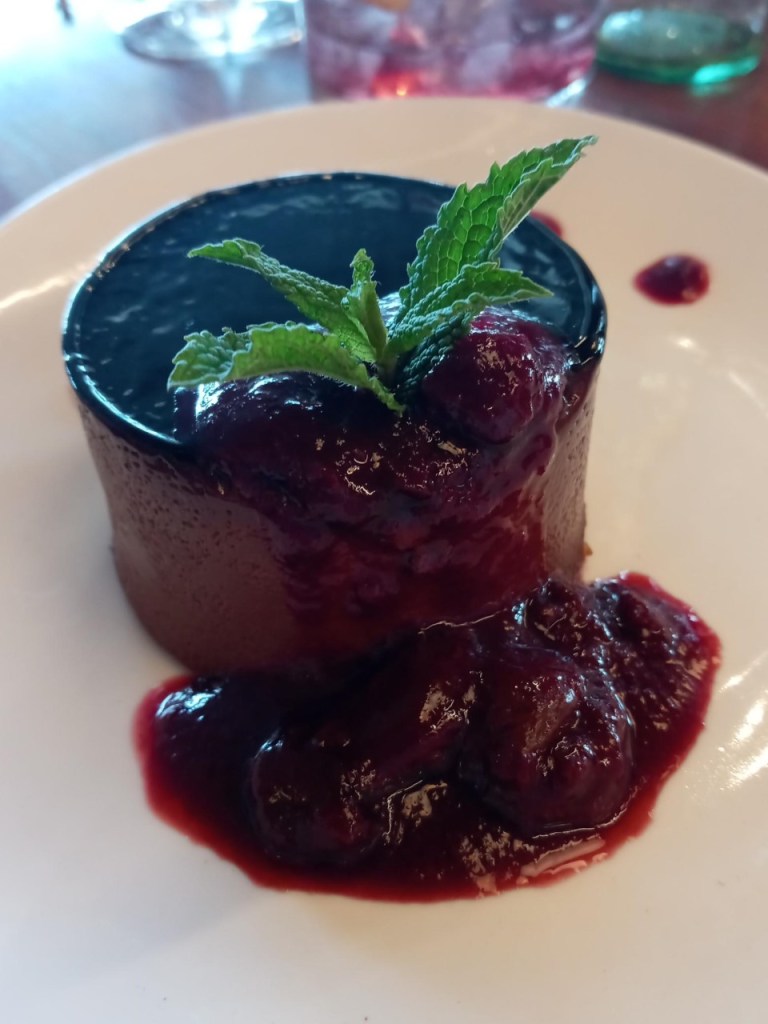

 The palak paneer is cubes of cottage cheese (the paneer part) cooked with spinach in a creamy sauce. It is another great gateway dish for people unfamiliar with Indian cuisine, especially vegetarians. I’ve ordered an extremely similar dish called saag paneer at other Indian restaurants, but I just researched the difference: palak paneer is always made with spinach, while saag paneer can be made with spinach and/or any other leafy greens, particularly mustard greens. Mystery solved!


 I make pasta all’amatriciana at home as a treat once or twice a year, but since guanciale is hard to find, I usually substitute cubed pancetta, which you can find at Trader Joe’s, Publix, and even Aldi sometimes. If you’re not into bucatini, pretty much any other pasta works well, except for weirdo choices like tri-color wagon wheels. What is the deal with those, anyway?


 I love Alessi’s scachatta, really and truly. But I have to give a slight edge to La Segunda here! Their version was more savory and less sweet, and it had more flavor, perhaps due to the visible green pepper chunks in the sauce. But I’d order either again, any time.