Bites and Bubbles (https://www.bitesbubbles.com/), located in the Mills Park shopping area at 1618 North Mills Avenue in Orlando, serves contemporary American cuisine with European flair. You might detect a slight French accent (hon hon hon). It is located right next door to Yamasan, a Japanese restaurant my wife and I loved when we discovered it this past summer. Now we have two new favorites next door to each other!
Bites and Bubbles is owned and operated by Eddie Nickell and Nicholas Olivieri, two restauranteurs who have had other successes around Orlando over the years. My wife and I had dined at two of their past restaurants, Prickly Pear (a Southwestern concept in downtown Orlando, bringing a much-needed and now much-missed cuisine to town) and Bananas (a diner that was the previous tenant of the current King Cajun Crawfish space in the Mills 50 neighborhood), and I always liked them. We never made it to Funky Monkey or Nick’s Italian Kitchen, but those were their places as well, and some of my readers may share fond memories from all of their spots. But it seems like Bites and Bubbles has been Nick and Eddie’s greatest hit so far, and now I see exactly why. The menu is incredible, and the service was impeccable.
I had been wanting to come here for several years, but because it is not open for lunch or on Sundays, I work late during the week, and my wife and I rarely go out to dinner (believe it or not), it felt like the universe was conspiring to keep us away. But finally, with about a week left in Orlando’s annual Magical Dining promotion, we made it for dinner on a weeknight and were able to snag a reservation for a comfortable table indoors. They also have a covered outdoor patio and rooftop seating that must be lovely in the winter, but it was still too muggy in September, and it also looked like rain.
For those who are unfamiliar, Magical Dining comes around every September, when some of the nicest restaurants in and around Orlando offer a special prix fixe menu where you choose an appetizer, an entree, and a dessert (from a list of three or four of each) for either $40 or $60, and some of the bill goes to support a different charity every year. This year, the charity is the REED Charitable Foundation, which promotes children’s literacy, specifically reading instruction and educator training. As if we weren’t already on board with the concept, I’m a librarian, and my wife, Doctor Professor Ma’am, is a college professor, so the cause is near and dear to our hearts. I’m so glad all these restaurants are helping.
And on top of the charitable donations, Magical Dining is a perfect opportunity to try new restaurants that tend to be more on the upscale side (which we rarely go to), and to sample more dishes than you normally might. Bites and Bubbles offers a $40 menu, which was definitely easier to swallow than the $60 options elsewhere, and it included most of the decadent dishes on their regular menu. That’s an offer we could no longer refuse, so it was the ideal time to finally visit.
The interior is a beautiful space with sexy decor, blending baroque and modern styles. There are plenty of red accents to break up the darker colors, and here in late September, they have put up some tasteful Halloween decorations (note the skull on the bar below). There are no booths, but we were seated at a table with comfortable chairs.
They offer a huge wine list (I believe curated by Nick), lots of beers, and a vast selection of cocktails with clever names. My wife is always happy to see mocktails available, so she ordered this drink called a gingerberry fizz that was spicy ginger beer (non-alcoholic, natch) mixed with cranberry juice and garnished with a slice of lime. She liked it, and it sounded really refreshing. She hates spicy food, but loves really spicy ginger beer. That stuff is nothing like the ginger ale people drink on airplanes!
Our server Julian dropped off the first of many special surprises of the evening: an unexpected appetizer featuring house-made pimento cheese (always a favorite of mine) topped with jammy roasted tomatoes in one bowl, some vegetables in another bowl (fresh carrots, marinated gigante beans, pickled okra, fresh and crunchy carrots, and a slice of grilled eggplant), and some toasted baguette slices and water crackers for spreading and dipping. I didn’t even know this was an option, and it definitely wasn’t part of the Magical Dining menu! Note the whimsical Halloween-inspired three-bowl setup, too. 
My wife loves winter root vegetables, so she was very tempted by the butternut squash bisque, even though it wasn’t one of the Magical Dining options. Since we are a fun couple who know how to party, she went for it. The bisque was thick, rich, creamy, savory, and slightly sweet, and that is whipped cream and some toasted pepitas in the center. It was a perfect soup for the fall (by which I mean the season, but it would also be a comforting soup to take the edge off the end of civilization).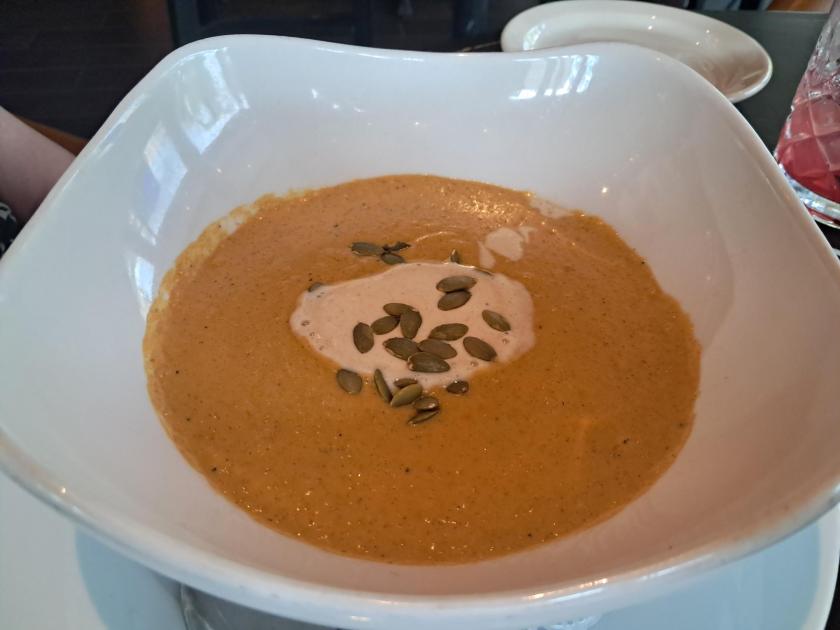
For her Magical Dining appetizer, she chose the escargot, which I would have definitely ordered if she didn’t. It was a generous portion of gastropods for this pair of gastronomes, and it was so nice that they were all removed from shells and resting in the thick, savory brandy mustard crème sauce. (The three shells were strictly decorative, but including the shells is de rigueur for serving escargot, whether you have to dig them out of the shells or not.) For those who haven’t tried escargot, yes, they are snails. They are traditionally served in garlic and butter, so they taste like garlic and butter, but these had an interesting flavor, both earthy and ocean-y, plus what they picked up from the sauce. They have the consistency of mushrooms, a little firmer and chewier than tinned oysters or mussels.  Did I use that nice toasted bread to soak up all the brandy mustard crème sauce? You better believe it.
My Bites and Bubbles-obsessed friend had told me you could order a second appetizer for Magical Dining instead of a dessert, and our wonderful server Julian confirmed that. I would have loved to try all four of the apps, but we made out like bandits, being able to get three of the four.
This app is their fried goat cheese, which is a large, round patty covered with crispy, golden-brown panko bread crumb and almond breading. The inside was equal parts creamy and funky, like goat cheese should be. It was served on a toasted baguette slice, topped with more of those terrific roasted tomatoes, and served with the most delicious fruit salsa, blackberries, fresh basil leaves, and the first fresh figs I’ve had all year. It was a wonderful combination of sweet, savory, tangy, creamy, crunchy, soft, and sticky, and it was plated like a work of art. The presentation made me think of the gorgeous dishes food stylist Janice Poon created for the Hannibal TV series, so artful and beguiling even when they were macabre (although this app was anything but macabre).
This was my second app, another beautiful tableau: house-made pork liver paté that was savory and salty and not a uniformly smooth texture throughout, so it was a fun experience spreading it on the toasted baguette slices and water crackers and dipping it in the grainy mustard. (I am truly, literally obsessed with mustard, so I really should have gotten the name of that mustard they used or found out if it was made in house.) Like the goat cheese app, this one came with so many accoutrements to make each bite a unique pleasure of tastes and textures: the bread and water crackers, the mustard, house-made cornichons, marinated gigante beans, drops of balsamic glaze, more fresh figs (that paired perfectly with the balsamic glaze), a sprig of fresh dill, and my favorite of all, the balsamic-marinated, grilled cipollini onions at 11 and 3 o’clock. I’ve only ever seen them in the olive bar at Whole Foods, where they are very expensive, but I could eat those like candy.  As much as I love the things that go onto a charcuterie board, I never order them when I’m out at a restaurant. I’d rather snack on all that stuff at home, and then I always get the thought “Why should I put this on a board when I can put it on bread, which is an edible board?” And then I recreate THE SANDWICH. But this pristine pork paté plating restored my faith in charcuterie boards.
With four entrees to choose from, my wife went with the duck confit, a classic French recipe for preparing a duck leg quarter (including the thigh) by curing it with salt and herbs, then slow-roasting it in its own rendered fat. I tried duck confit for my first time earlier this year at a legendary Los Angeles restaurant I haven’t reviewed yet, and I think this was my wife’s first time. However, never content to do things the easy or expected way, Bites and Bubbles served their duck confit like an upscale take on a classic Thanksgiving dinner, with country cranberry stuffing, mashed sweet potatoes, cranberry relish, and duck gravy with diced carrots, served with haricots verts on the side (that’s green beans for you non-Francophiles).

She loved it! She typically doesn’t like things covered with gravy or any kind of sauce, but she ended up loving the rich duck gravy they used. She normally doesn’t like Thanksgiving stuffing either, but she said that was her favorite part! She was also pleasantly surprised that the mashed potatoes turned out to be mashed sweet potatoes, which she greatly prefers.
As for me, I was tempted by all the entrees. I might have chosen the classic French dish beef bourguignon, which is canonically Superman’s favorite meal in DC Comics (although he likes his with ketchup because he is still that farm boy from Smallville, Kansas). Unfortunately, that dish includes mushrooms, which, much like Kryptonite is for Superman, are my personal Kryptonite.
So instead I chose one of my favorite meals, a braised lamb shank. This is one of my favorite things to eat in the world, and I love ordering them at Turkish and Greek restaurants. In fact, I love braised lamb shanks so much that I learned how to make my own in a rich, thick sauce of crushed tomatoes, onions, roasted red bell peppers, and hot cherry peppers. My sauce takes on so much rich lamb fat, and it makes a perfect pasta sauce that lasts for days after all the meat is gone. I usually braise mine for five to six hours until the meat is literally melting off the bone, but I could tell this lamb shank wasn’t cooked quite as long, since it held its form better, clinging to the bone. 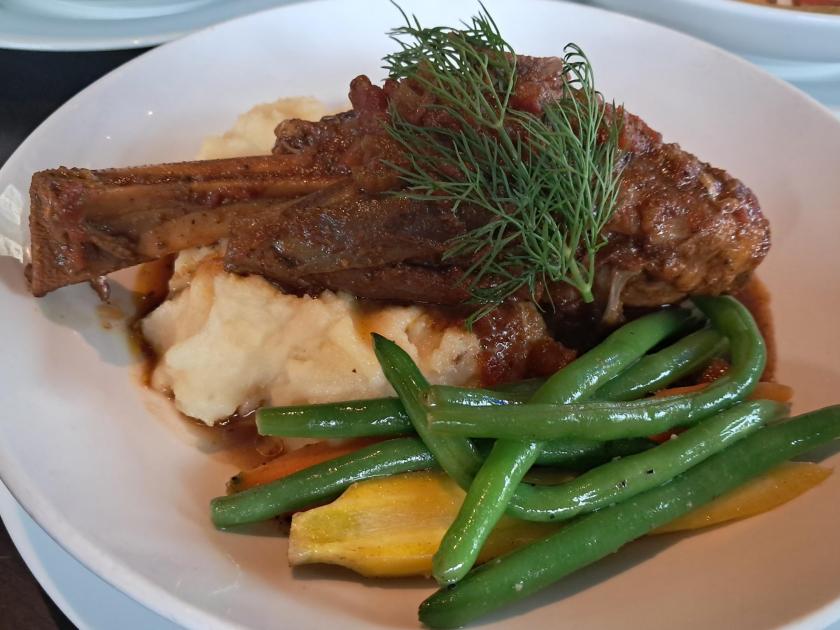 It was tender and unctuous in its own tomato broth, and I tasted cumin as the main flavor in there. it was served on a bed of mashed potatoes (not mashed sweet potatoes this time), with haricots verts and fresh dill on top, and it was lovely. I ate most of this dish at home the following day, since another distraction arrived at the same time.
One Bites and Bubbles specialty I’ve been hearing about for years is their duck fat-infused burger, and even with all our other delicious food, it was such an ordeal to finally make it there for dinner, we couldn’t leave without sharing it. I’m so glad we did. It consists of two smash-style patties cooked in duck fat, shredded lettuce, a tomato slice, thin-sliced pickles, and house sauce on a soft and fluffy brioche bun. It also comes with Swiss cheese, but my wife doesn’t like cheese on burgers, so Julian brought the two slices of Swiss on the side for me. In fact, she doesn’t like dressed burgers or buns, so I slid the bottom patty out for her, threw the cheese on the other patty, and ate the burger in the form of an actual burger, as intended. It was like a fancy version of a Big Mac, especially with the flavor of the lettuce, pickles, and tangy sauce that was reminiscent of McDonald’s “special sauce.” Of course, long time Saboscrivner subscribers should remember that McDonald’s totally ripped off their Big Mac from the Original Double-Deck burger, the most popular burger from legendary Los Angeles-area diner Bob’s Big Boy, which was once a national chain. Even though I like ketchup on burgers, I didn’t add any, because I wanted to taste the meat and the combination of Chef Eddie’s intended flavors without the strong flavor of ketchup horning in. The fries were a $4.99 upcharge, but so worth it. They were Sidewinder fries, which are among my favorite fries due to their crispy, crunchy outer layer. We were too full to mess with them, but they crisped back up just fine in our toaster oven today.
My wife is much more of a dessert person than I, but I made my choice to go with two apps instead. Nothing would sway her from the chocolate fudge layer cake, drizzled with chocolate sauce and topped with a dollop of whipped cream, a buttery, shortbread-like cookie, and a Pirouline rolled wafer cookie filled with chocolate or hazelnut spread. Like everything else in this glorious epic dinner, the presentation was stunning, and she said the cake itself was superb. She brought about half of it home and said it was even better — even more moist — after a night in the fridge! 
And this is when Bites and Bubbles outdid themselves again, bringing out a second dessert that wasn’t even one of the Magical Dining options: their pistachio gelato affogato. We never saw it coming and didn’t ask for it, so it was the most pleasant of surprises: scoops of pistachio gelato, mini bombolini (like little Italian doughnut holes filled with custard), crushed pistachios, more of the buttery shortbread-like cookies and Piroulines, and dollops of whipped cream. It was an affogato because it came with a shot of espresso we were supposed to pour over it, but my wife never drinks coffee after 3 PM, or it will literally keep her up all night, which means we would both be up all night. Instead of pouring the espresso over this lavish, decadent dessert to make it a true affogato, I dunked the bombolini and cookies in the tiny metal cup of espresso to make my own wee, personal affogato. 
I can’t get over the incredible food at Bites and Bubbles, the artful presentations, the intimate setting. But I have to rave about the service even more. Julian was one of the kindest, most knowledgeable, most patient servers we’ve ever encountered in Orlando, and Nick and Eddie were the hosts with the most. They came to our table to personally check on us and did everything in their power to give us one of the nicest dinner dates we’ve ever had, anywhere.
Have you ever seen Goodfellas, Martin Scorsese’s 1990 masterpiece? Do you remember when Henry Hill (the late Ray Liotta) takes his girlfriend Karen (Lorraine Bracco) on an extravagant date to the Copacabana nightclub, and a long, uncut tracking shot follows them from the kitchen entrance through the bustling restaurant, where everyone is being so nice to them, moving a table right up in front of the stage, doing everything they can to give them an unforgettable, glamorous experience? Well, that’s how I felt, taking my wife to Bites and Bubbles for the first time. I don’t think I’m a particularly cool guy, and I always say that I’m no influencer, nor do I want to be. But they made us feel so welcome and so special, like a couple of big shots, and I’m pretty sure that anyone who dines at Bites and Bubbles, whether Magical Dining is going on or not, will get that kind of warm reception. I can’t recommend it highly enough or rave enough about this dinner we enjoyed there.
Of course, we returned home with enough leftovers for a few more meals because we went a little wild there, but now that we’ve experienced Bites and Bubbles, I have no doubt we’ll return, and hopefully sooner rather than later. If you have a hot date, friends in from out of town, dinner with parents (who actually like trying new things, unlike our parents), or something to celebrate, this is probably one of the best restaurants in Orlando for a special occasion dinner to commemorate something like that. Ask for Julian, and leave yourself in Eddie and Nick’s capable hands. They will treat you right!
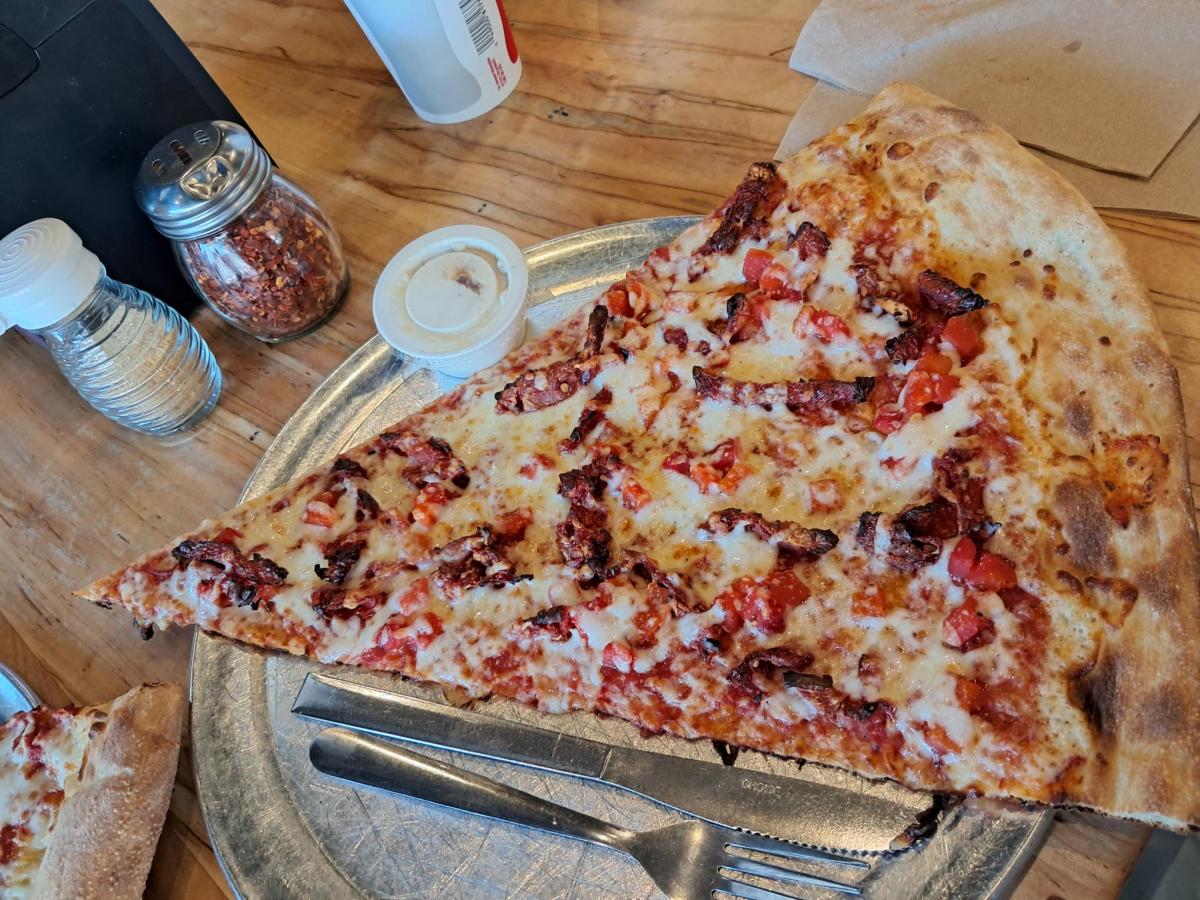
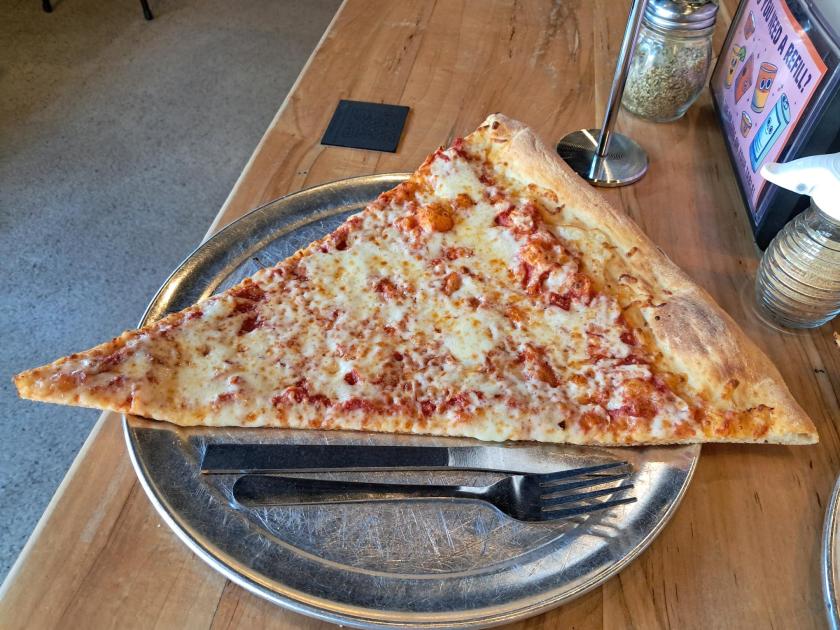 You can see how large it is compared to a normal-sized plate, fork, and knife. That’s the normal slice size!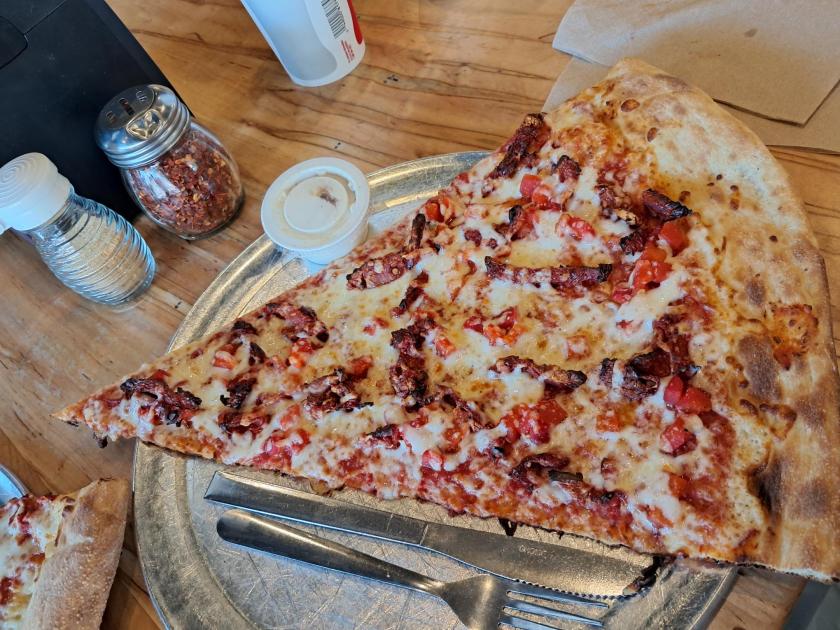
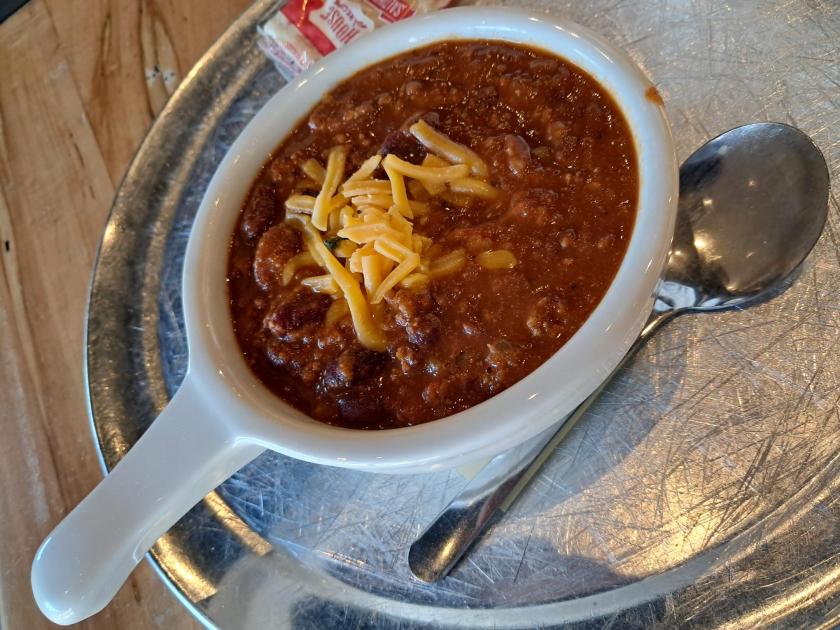 Fear not, vegetarians and vegans, because Lazy Moon also serves a hearty vegetable chili with zucchini, squash, and beans simmered in “mild chili spices.” I haven’t tried it, but you may want to. You can even order giant slices of pizza with either the regular beef chili or the vegetarian chili on them!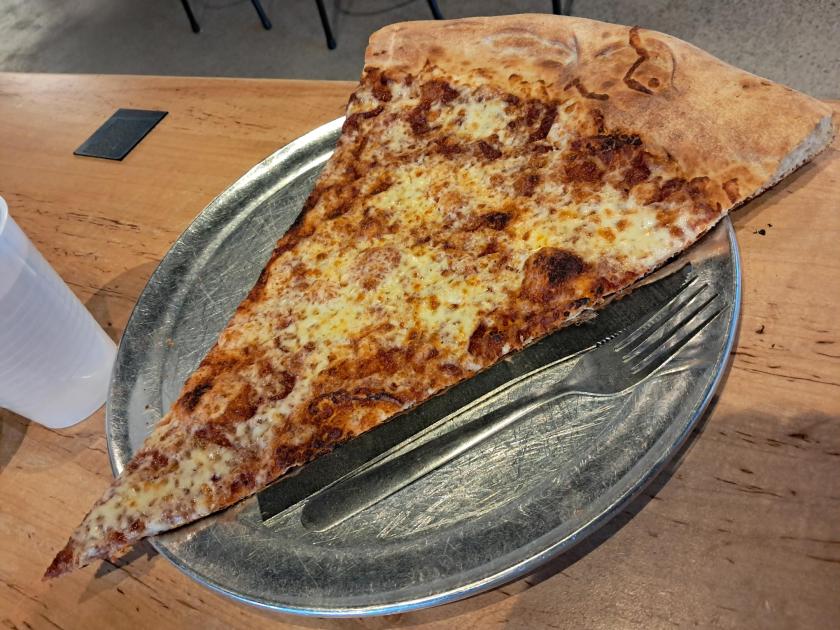


 The two sauces that came with the squid are ginger fish sauce, which was on the pungent side, and “green chili sauce,” which I really loved. It had a kick, but also a cool sort of flavor. I admit I used most of that sauce on some pork loin I marinated, roasted, and sliced very thin.


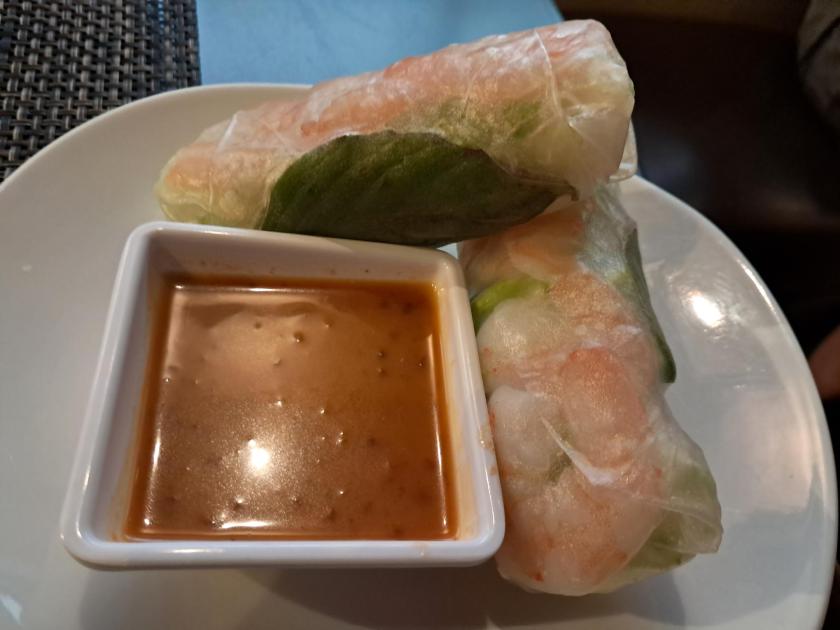
 These were so good, we got them again on our third visit.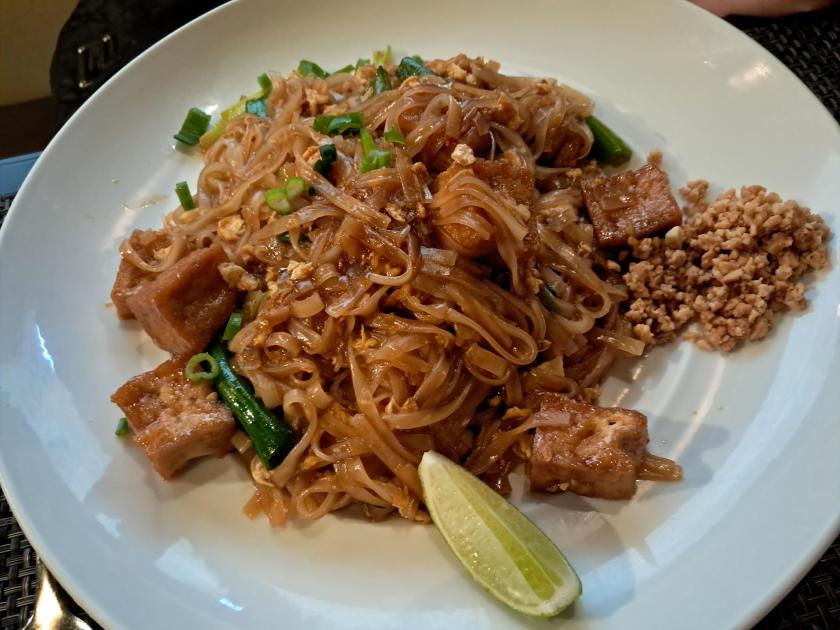
 Well, my wife was brave enough to try the drunken noodles, and she loved them so much that she ordered them (mild, of course) on our second visit, and again on our third! I tell ya, this dish is a crowd-pleaser. If you’ve never tried them before, either at Thailicious or your Thai restaurant of choice, give them a chance, and you won’t be sorry. She wasn’t.


 The chunky hot sauce was absolutely delicious. I’d say it had a medium-hot spice level, so too much for my wife, parents, and in-laws, but not hot enough to make people run to the bathroom or beg for a glass of milk.
 The redder chunks of meat in the middle are beef wot, a similar stew made with beef that was a little spicier. (If I mixed up the lamb wot and beef wot, I apologize to everyone!) The dark red dish on the right with the hard-boiled egg (a pleasant surprise) is doro wot, a spicy chicken stew flavored by seasoned butter called niter kibbeh and a pretty spicy spice blend called berbere. After this meal, I bought a little thing of berbere at Penzey’s Spices, and I need to experiment with it more. That is homemade cottage cheese in the top right. I loved everything. I’m always excited to explore a new cuisine, and whenever a restaurant offers some kind of combo to let me sample multiple dishes and flavors, I will take that opportunity.
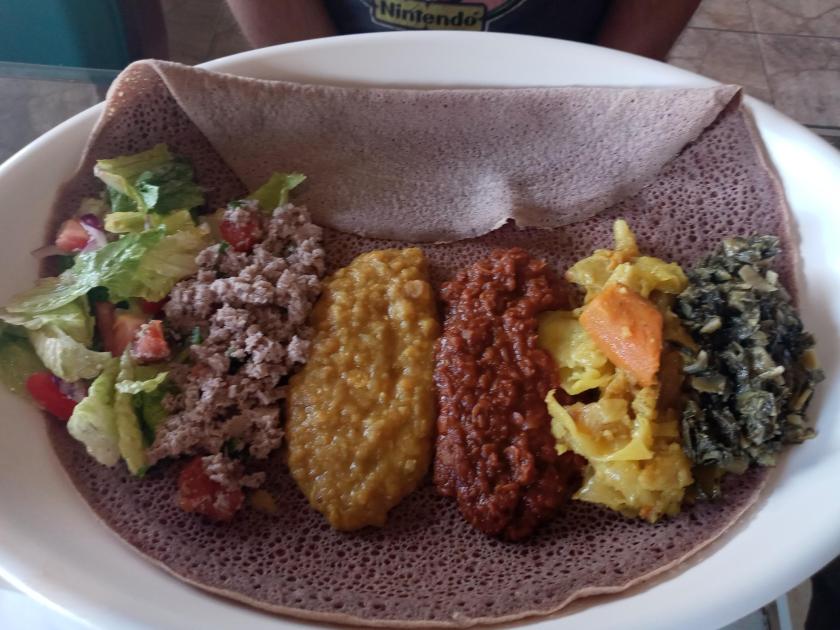 After that, the dark red is ye misir wot, with pureed split red lentils simmered in chopped onions, garlic, ginger, vegetable oil, and berbere sauce, so it was spicier than the split peas next to it. Next up is atakilt (vegetable) wot with the most delicious potatoes, carrots, green beans, onions, cabbage, and ginger, all stewed together. Finally, the vegetarian combo platter had ye gomen (collard green) wot on the right side, which was probably similar to my gomen besiga, only with no beef in this one.


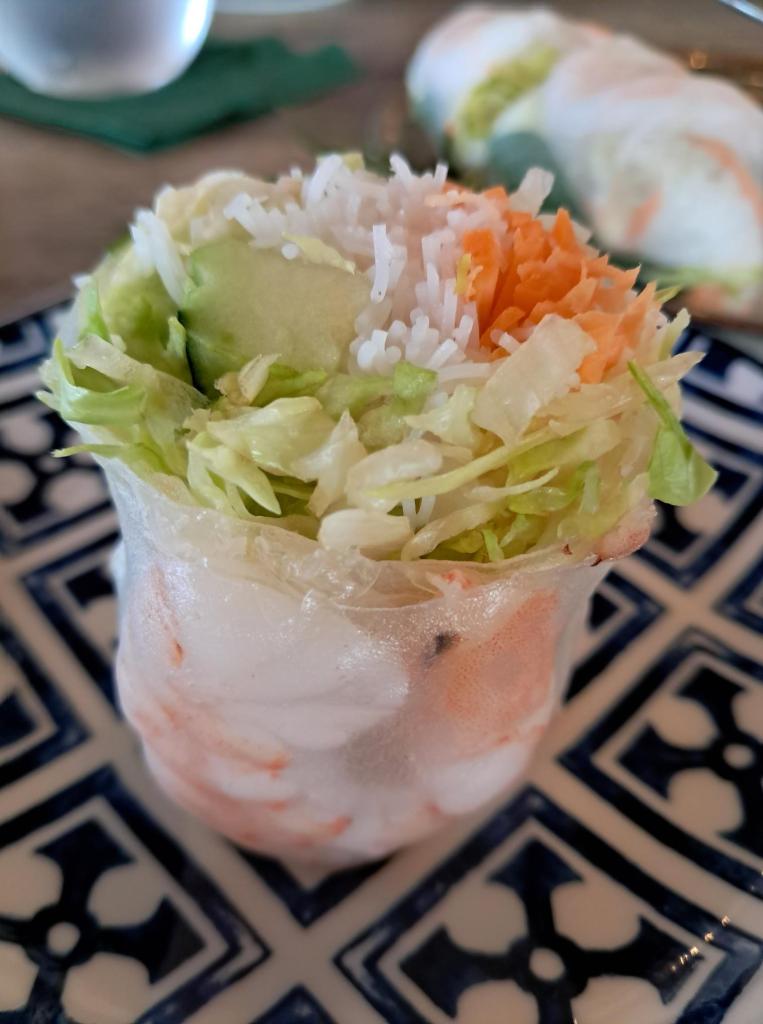


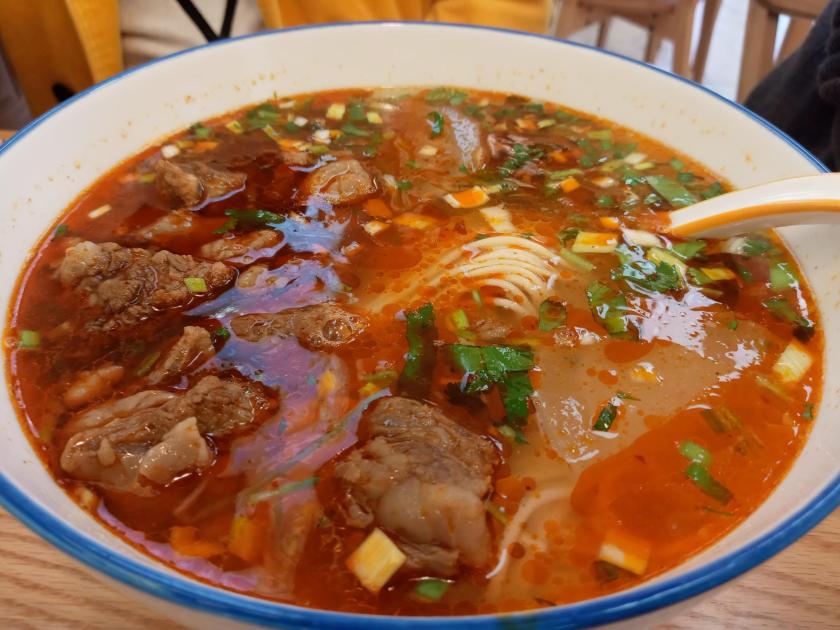


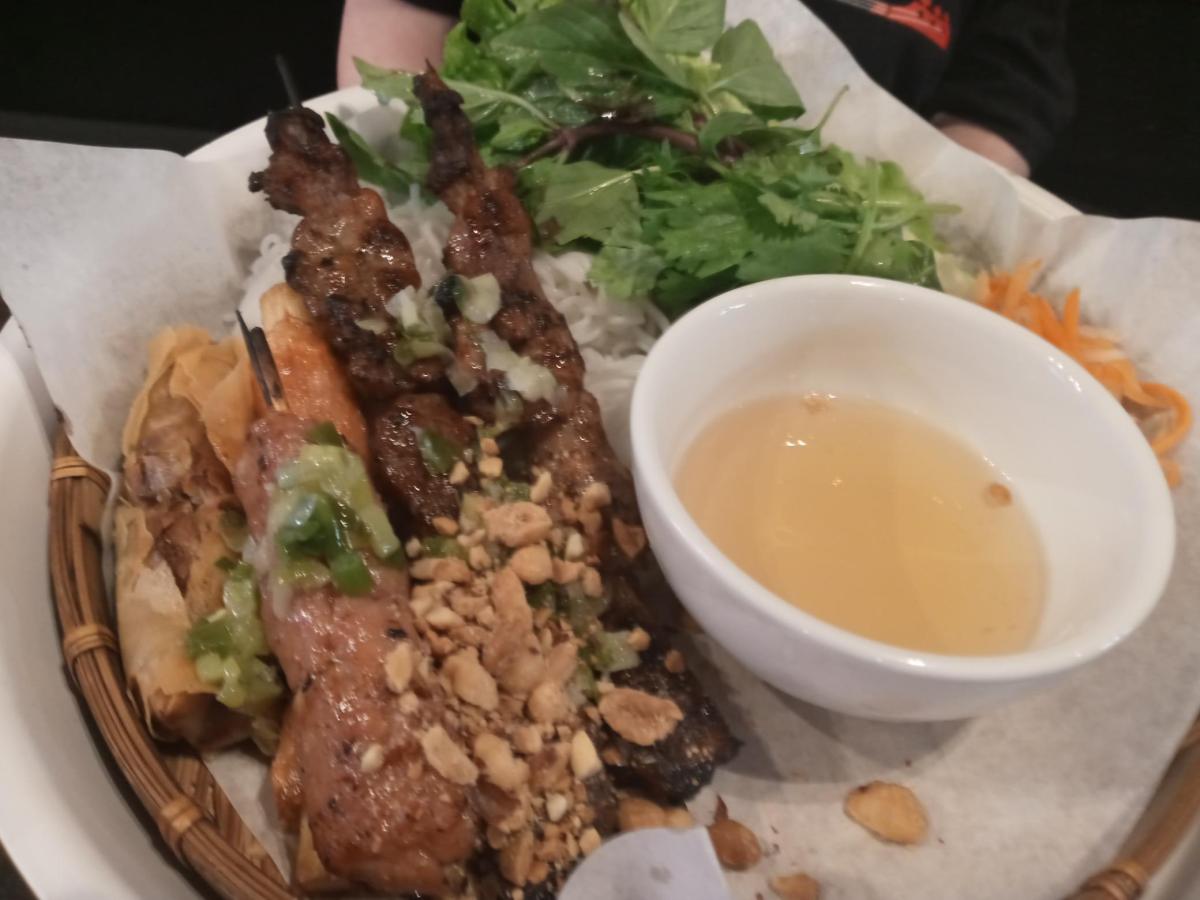


 It was good, but the bun bo hue at Pho Huong Lan still wins.

 (We ended up taking both crab legs home, along with a bunch of other leftovers, where I cracked them open for myself. There wasn’t much meat, but I often think that even larger crab legs are more trouble than they’re worth.)
 These were pretty big oysters on the half shell, fully cooked and covered with sizzling garlic herb butter and parmesan cheese, served with slices of toasted French bread dabbed with even more garlic herb butter. Not exactly health food!


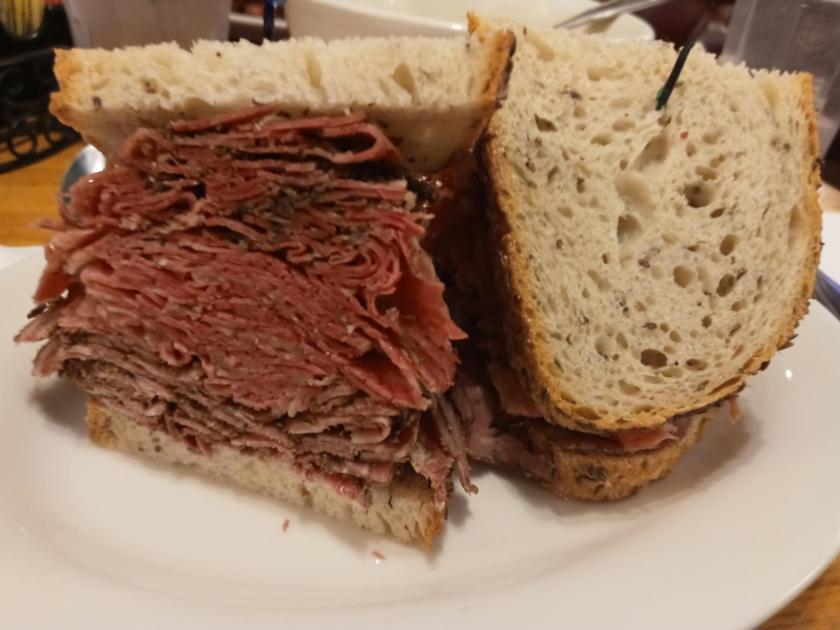 So what is rolled beef? I wasn’t entirely sure, either before or after eating this heckin’ chonker of a sandwich, so of course I did some research and found a

