Phở Vinh (http://www.phovinhorlando.com/) is one of the many Vietnamese restaurants east of downtown Orlando, but it is slightly east of the main Vietnamese neighborhood, Mills 50, in an adjoining neighborhood known as the Milk District, due to the presence of the T.G. Lee Dairy headquarters. Some of my favorite restaurants in Orlando are in the Milk District, and I’m happy to add another one to that number.
Our wonderful next-door neighbors took us to dinner at Pho Vinh several years ago, and we all liked it, but my wife and I kept returning to our usual Vietnamese restaurants, Phở 88 and Little Saigon, in the subsequent years. Both are very good, but I recently felt like a change, so I recently called in a takeout order with Phở Vinh, brought it home, and unpacked deliciousness that even exceeded that dinner way back when.
Since the name of the place is Phở Vinh, we both decided to order phở, the classic Vietnamese beef noodle soup that we love so much. Even though “beef noodle soup” sounds heavy, it is surprisingly light and refreshing, despite still being hearty and filling.
When we go to our usual Vietnamese restaurants, my wife always orders phở tai ($9.95), with thin slices of rare beef that cook in the hot, fragrant, clear broth. Phở Vinh does what most Vietnamese restaurants do, packing the meat, noodles, and aromatics in one container, and the broth in a separate container, so the meat doesn’t get fully cooked and the noodles don’t turn to mush on the drive home. We order takeout a lot more often than we dine out, especially these days, so we appreciate this very much. 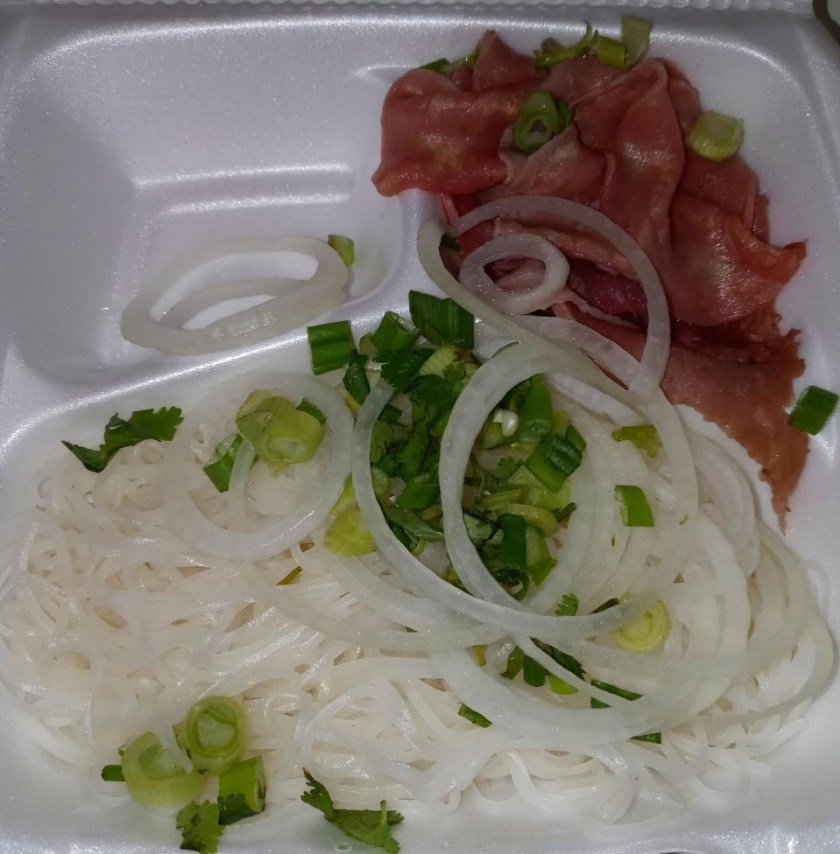
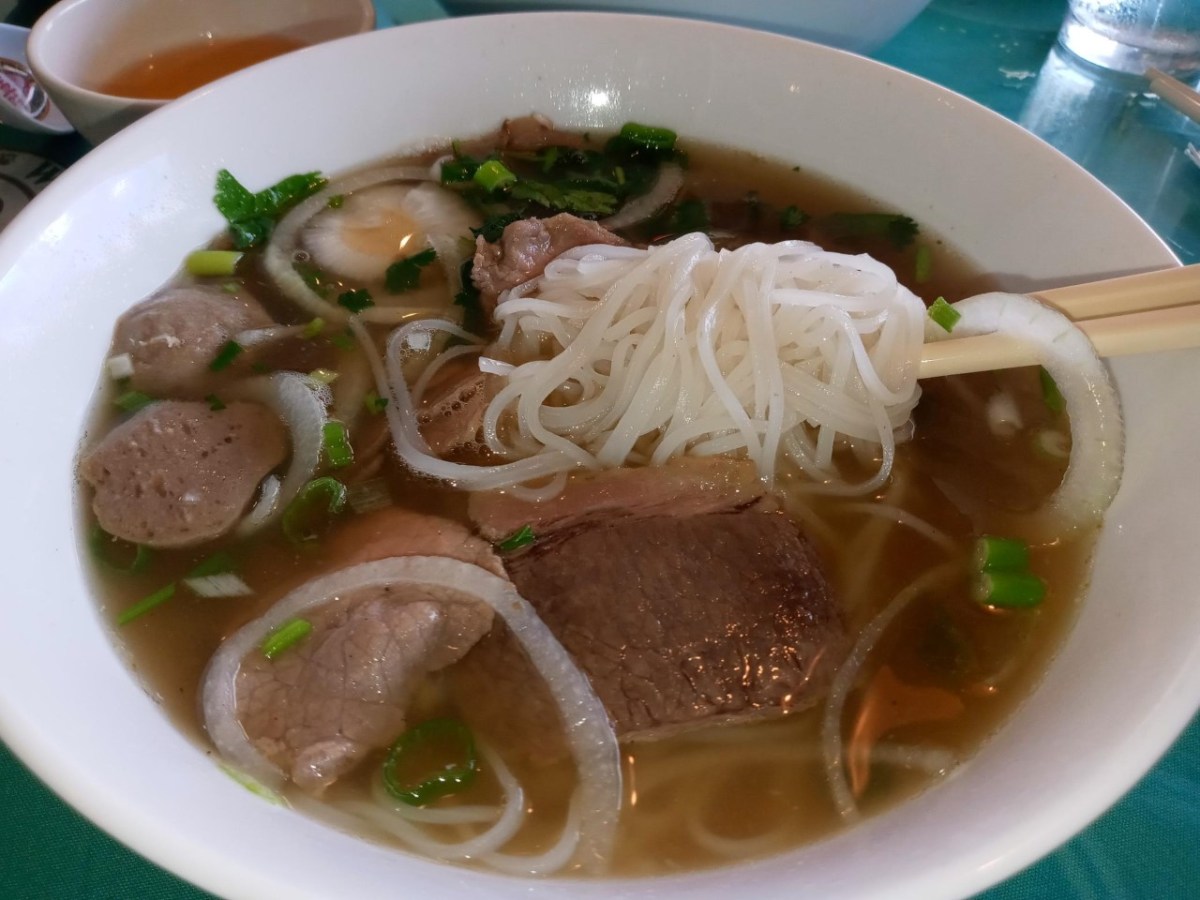
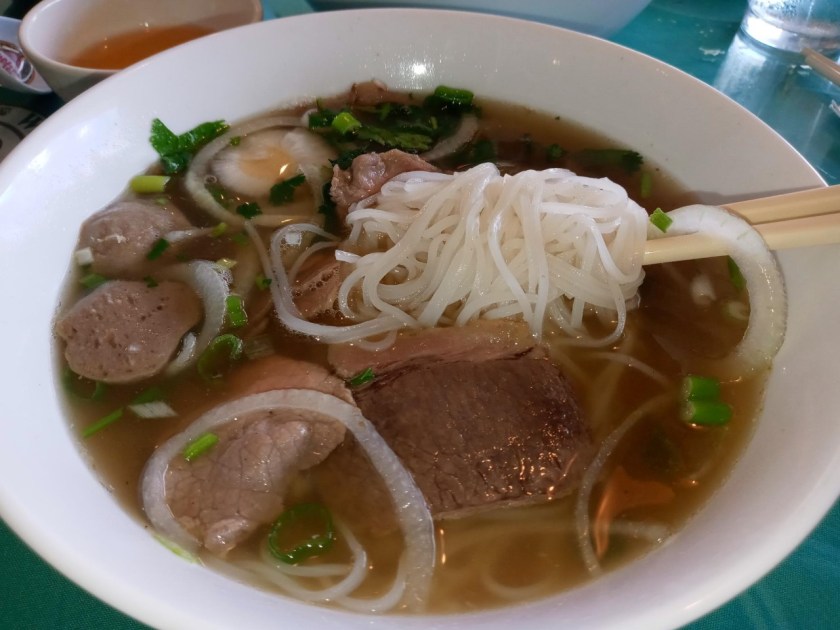
I got what I normally order at other Vietnamese restaurants, the phở xe lưa ($13.95), with thin slices of rare beef, brisket, flank steak, tendon (rich, unctious, and chewy — I love it), and tripe (not my favorite, but it’s always included with the other meats in the combination phở). 
Here is the phở broth. We both got identical containers, which are pretty generous.
And here is a shot of my steaming soup, all the meats and noodles simmering with torn basil leaves, paper-thin sliced onions, scallions, and fresh jalapeño peppers with all the fiery seeds and ribs intact. I squirted in a bit of lime juice from lime wedges (also included), but I rarely alter my phở beyond that, despite the option of sauces like hoisin and sriracha. It is better to taste it as intended, especially when visiting a new restaurant for the first time, or in our case, the first time in a long time. It was wonderful. So fresh and fragrant, and like I said, never a heavy meal.
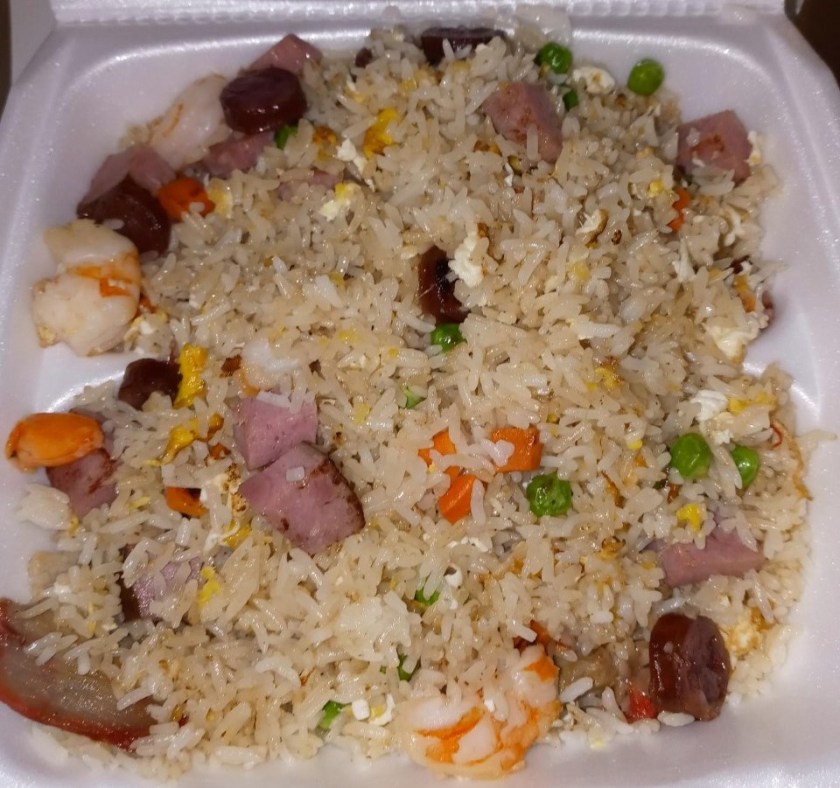
I also got an order of cơm chiên dương châu ($11.95), fried rice with shrimp, roast pork, ham, and sweet, chewy Chinese sausage called lap cheong or lap xeong, which I love. They should call this dish the “kosher special”! I was hoping to share it with my wife, but figured she might not like it, so I’d have more for myself to pack for lunch the next day. But she thrilled me by loving the fried rice, even the Chinese sausage, which I definitely wasn’t expecting.
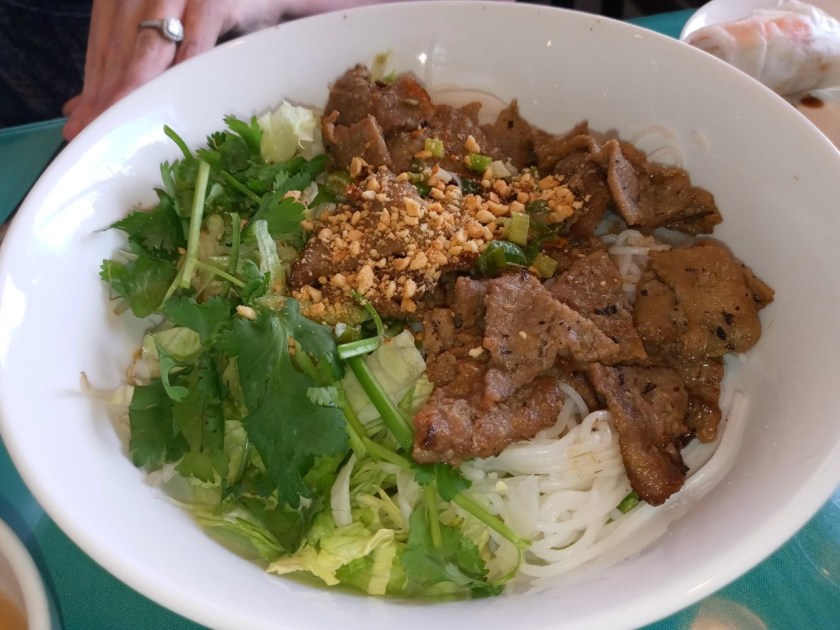
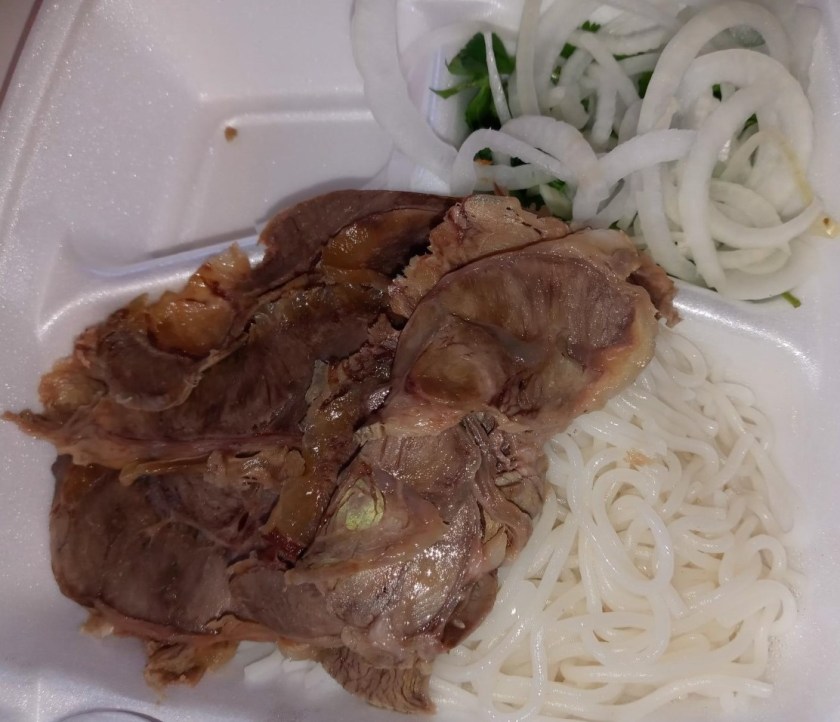
Guessing wrongly that she wouldn’t be into the fried rice, I ordered my wife a second whole meal for the next day, since I was going to be at work, and she doesn’t cook. After phở tai, this is her favorite Vietnamese dish to order: bún bò nướng, or charbroiled beef with rice vermicelli (the bún). At Phở Vinh, this also came with a crispy fried spring roll, so the dish was called bún bò nướng chả giò ($12.95). I thought she might like to try the spring roll (the chả giò), but she wasn’t interested in it, so I ate it while it was hot and fresh. We almost never get spring rolls, and I was reminded how much I like them. I didn’t try any of the rest, but she ate it all, which means she liked it. (If she didn’t, she wouldn’t!)

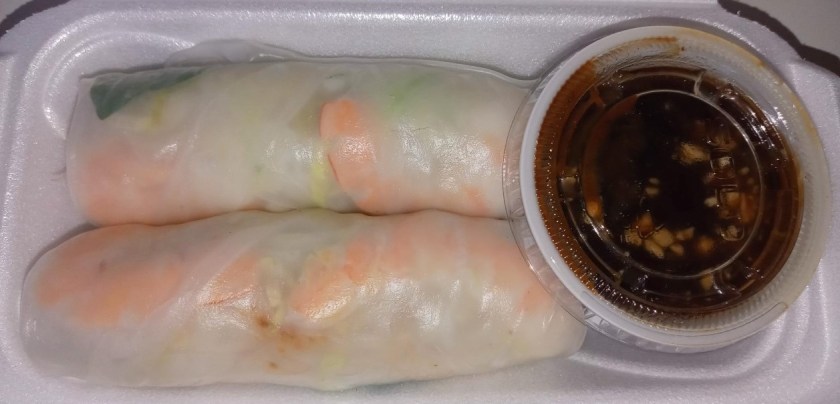
My next visit to Phở Vinh to bring home more takeout was two weeks later, on a recent drizzly, dreary Friday evening. I got my wife the summer rolls she greatly prefers (an order or two for $3.95). Unlike the crispy fried spring rolls, summer rolls are wrapped in a thin, chewy, sticky rice crepe, stuffed with pork, shrimp, rice vermicelli, and vegetables, and served chilled. I’m never into these, but she loves ’em, especially the sweet, sticky peanut sauce they are always served with.
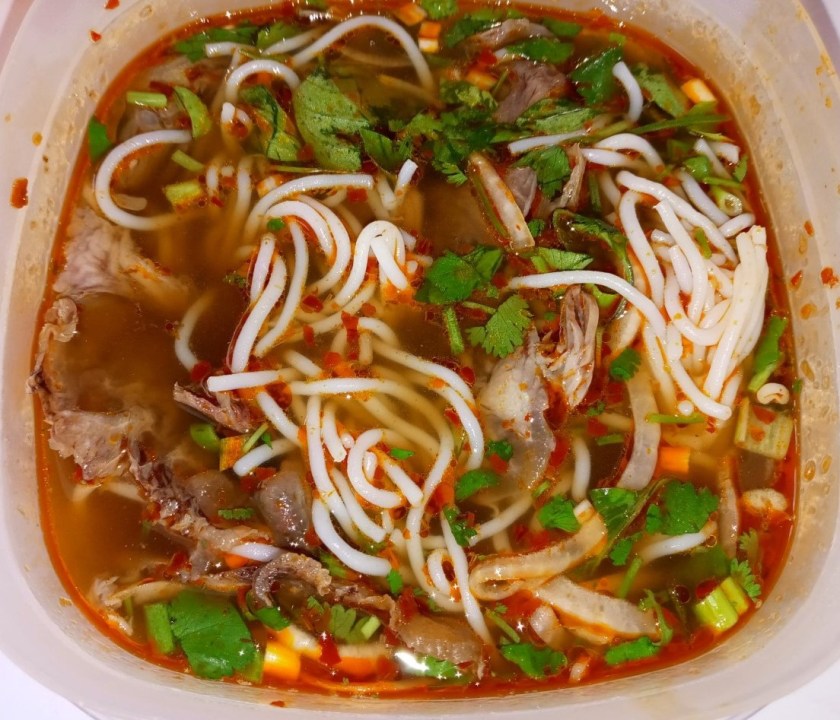
She got her usual phở tai again, but I switched it up and got a different kind of noodle soup, the very spicy bún bò huế ($11.95), with slices of beef and pork in an intensely hot broth. As usual, the meats, noodles, and vegetables were packaged separately from the orangey-red broth. 
And here’s the gleaming, glistening soup, perfect for warming me up (and making my eyes water and nose run) on a surprisingly chilly, rainy evening. 
Finally, I got bánh mì bò kho ($11.95), a rich Vietnamese take on classic beef stew, served with half a loaf of crusty French bread. I didn’t eat this until the following Sunday, two days later, when it was even chillier, but it heated up great and tasted delicious. It was thicker than the phở and bún bò huế, but not nearly as thick as some beef stew I’ve had. There were plenty of big chunks of soft carrot, thin slices of onion, and huge pieces of tender beef that were a perfect, soft consistency — not that different from oxtails, which are one of my favorite foods. That got me thinking about how awesome a Vietnamese oxtail soup or stew would be. 
Unfortunately, the French bread was burnt, as you can see. I still ate it, don’t get me wrong! I heated it up in the toaster oven, but had I been at the restaurant, I would probably have asked for another piece.
So as you can see, Phở Vinh won us over. With this stupid weather we’ve been having, alternating between days in the 80s and nights in the 50s, you can imagine how good nice, hot soups and stews would be. If you’ve lived in Orlando for a while, you probably have a favorite Vietnamese restaurant. We sure did, but I’m glad we branched out and tried Phở Vinh. It is definitely a regular in our rotation now, and we will definitely return.

 Any Vietnamese restaurant will serve phở with a plate of several fresh herbs and additional ingredients to add, so diners can customize their soup to their hearts’ content. I always tear up fragrant fresh basil leaves and crunchy sliced jalapeño peppers (these are fresh; much spicier than the pickled kind from a jar, so don’t touch your eyes!), but I prefer to leave the crispy bean sprouts out of my phở. If I get lime wedges, I’ll usually squeeze some lime into my phở and some more into my glass of water. Then there are condiments: hoisin sauce, sriracha (overrated hot sauce), and sambal oelek (thicker, chunkier hot sauce). I’ll usually add just a tiny spoonful of sambal too, but only after tasting the pure, unadulterated broth first. As you might have guessed, my wife prefers plain phở, just as it comes out of the kitchen… but with as many onions fished out as possible.





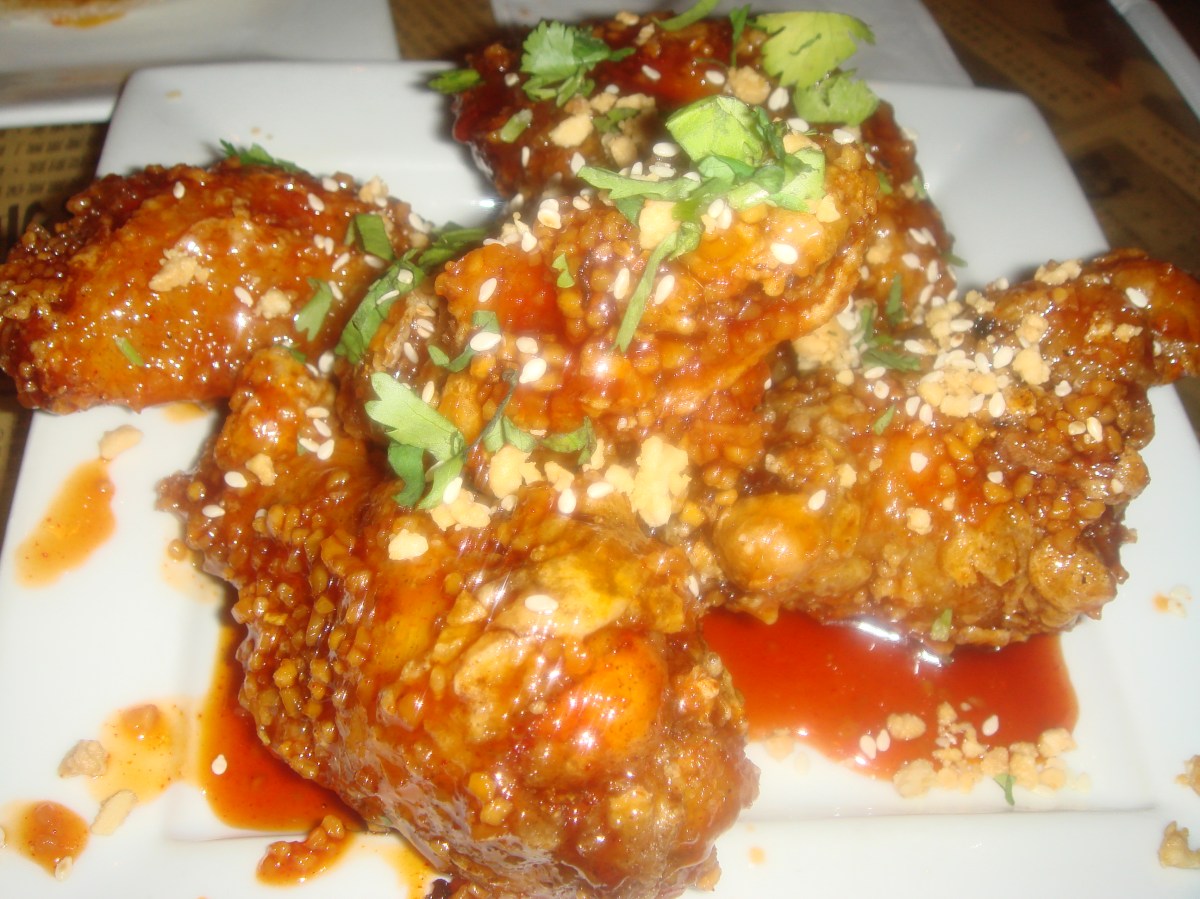

 These wings made my
 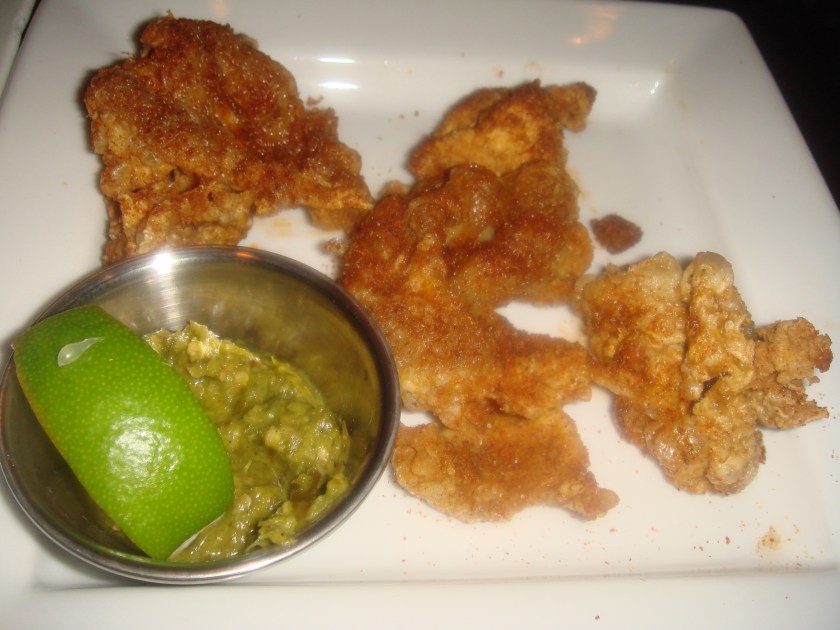 For the first time ever, I recently fried up my own chicken skins at home into a crispy Jewish delicacy called gribenes, and rendered the fat (schmaltz) for cooking with later. Fried chicken skins are so much lighter and less oppressive-feeling than pork rinds, so I’m definitely a convert.
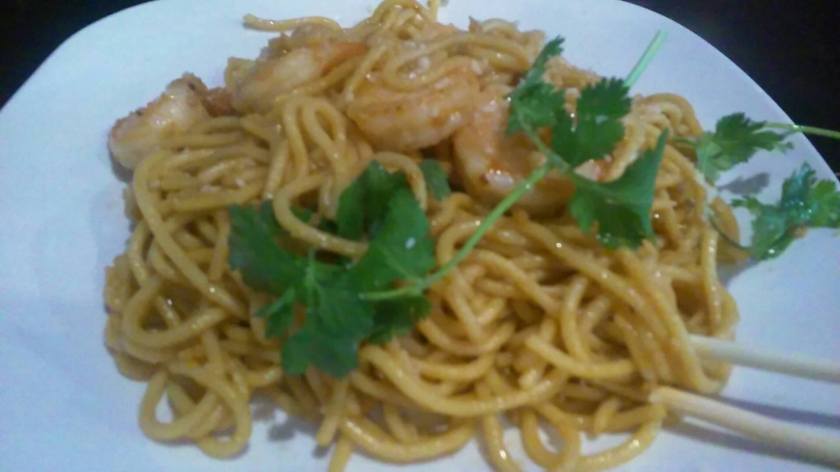
 In the past, I have loved so many of Hawkers’ noodle dishes: curry-seasoned Singapore mei fun with chicken and shrimp, beef haw fun (with wide, flat noodles, similar to the beef chow fun I order at almost every Chinese restaurant that offers it), char kway teow, and spicy pad Thai. Now I’m adding the Yaki udon to this all-star lineup. The only problem in the future is what to choose: an old favorite or an exciting new possibility. You can’t go wrong either way, trust me.


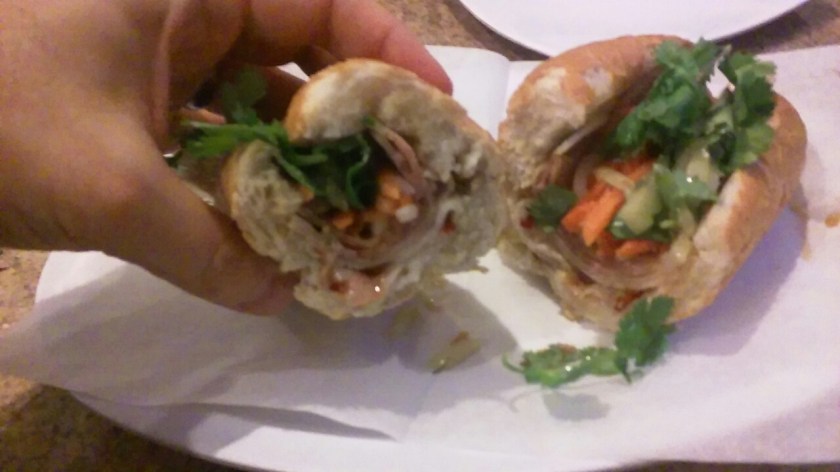
 I ended up choosing a B1 special combination, with several different cold cuts (served cold), and a B2 grilled pork (served warm), both to go.